

Context
After OpenShift Data Science Tech Preview we knew the product needed to expand to add more functionality, but as it grew we also added more designers, and the problems we were solving got harder as the technology got more advanced. To show the story of the product and my leadership within it I have condensed a lot of time into this portfolio entry. If you have questions or want to dive deeper into any of the specific areas please reach out.
Understanding the Workflow
To understand the most important next steps I convened a virtual face-to-face with stakeholders. The goal was to make sure we all had the same understanding of the best way to expand the product features and what those features should include.
Before the F2F, I worked with the PM on a high-level workflow and because we only had a limited amount of time we discussed which three areas we would cover. During the F2F, we broke out into three teams and created more detailed workflows for each of those areas.
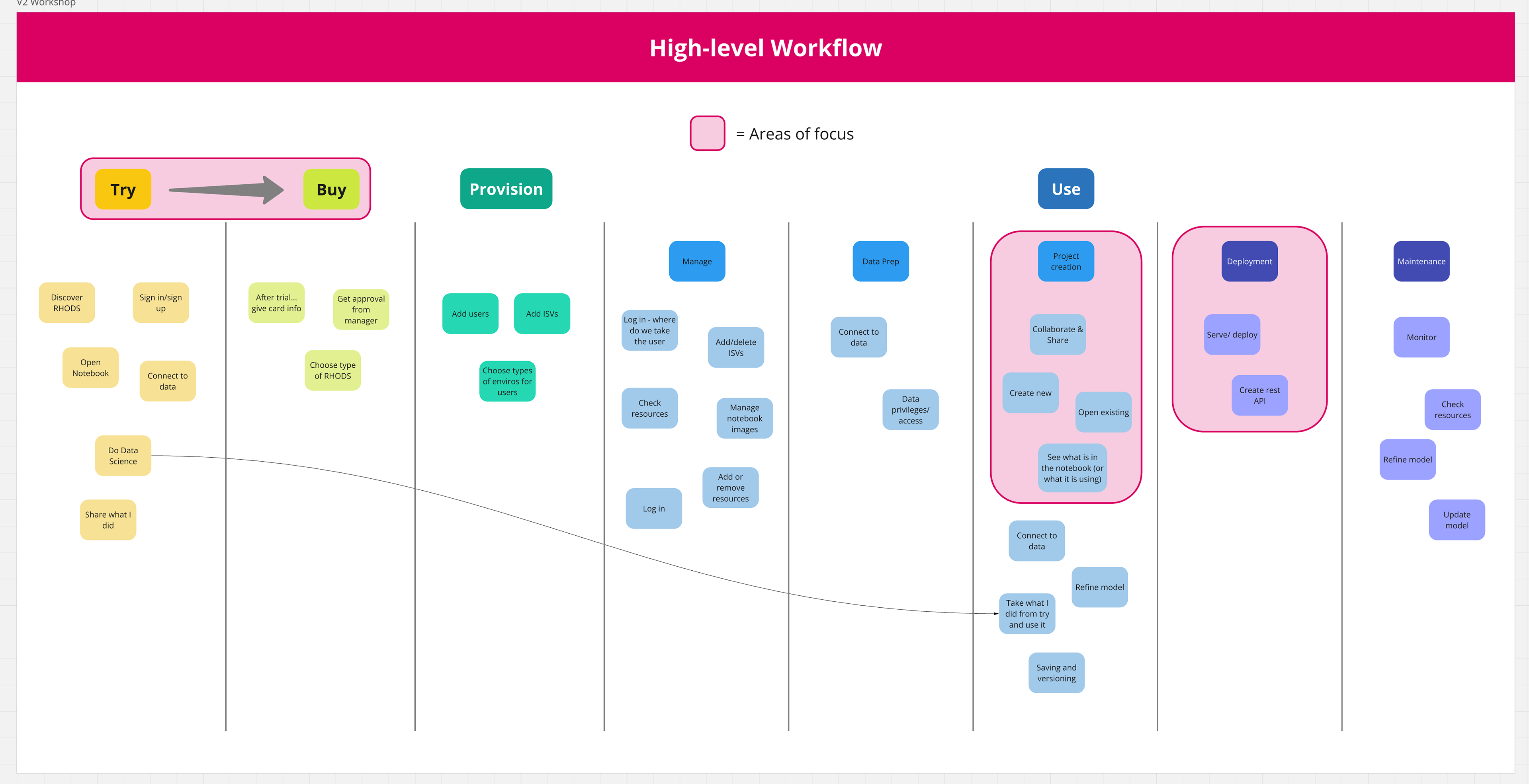
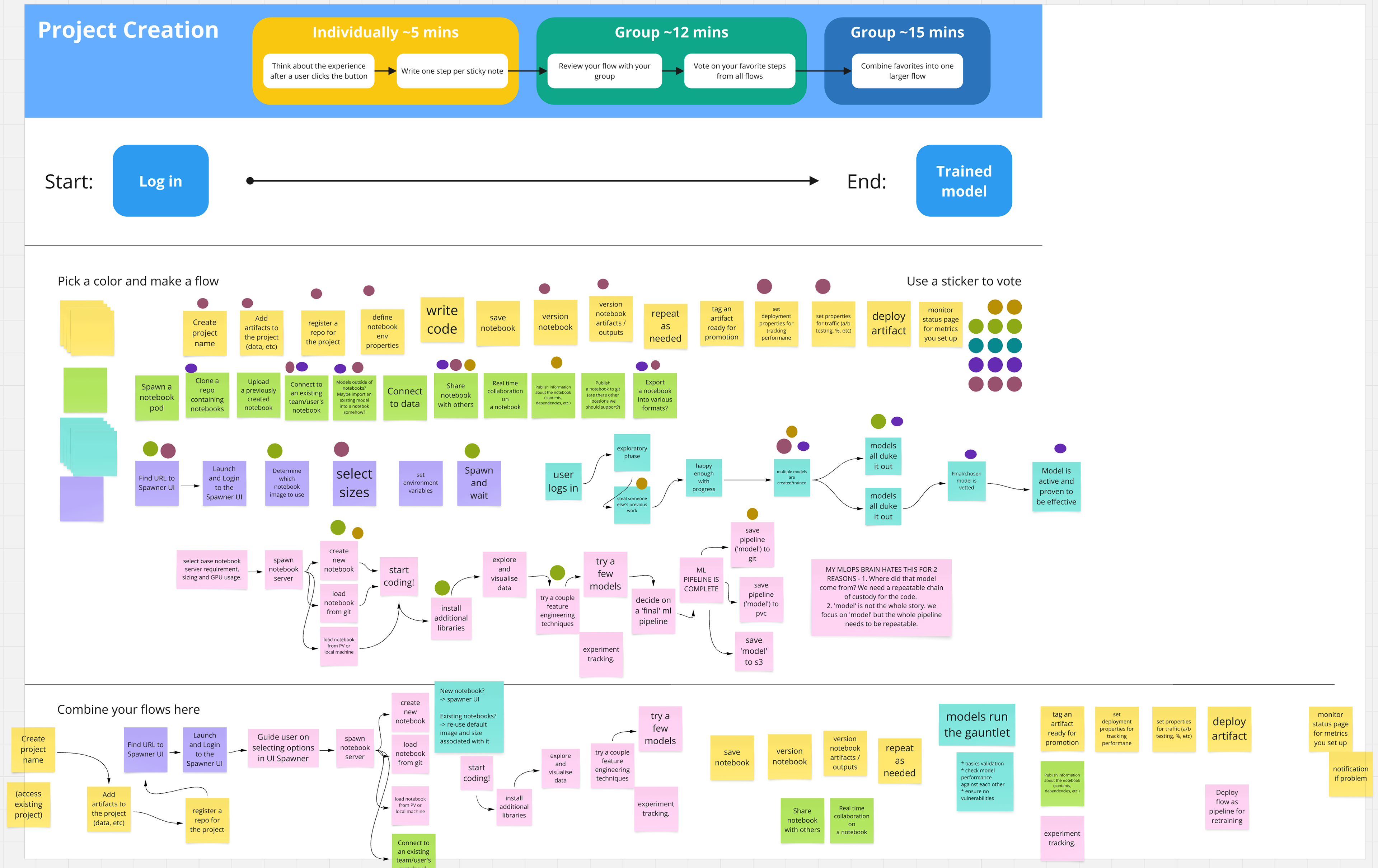
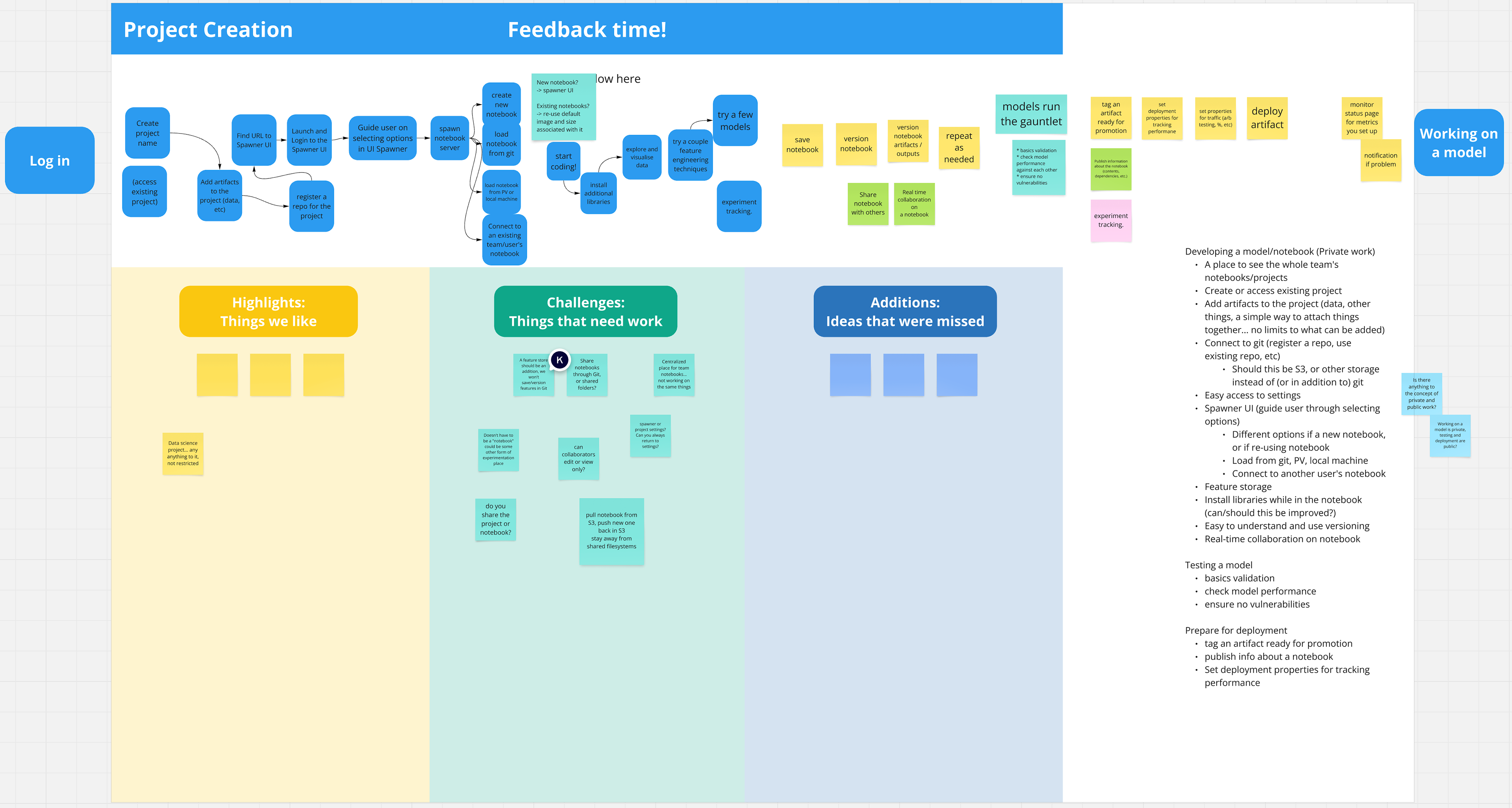
Given the stakeholders in the F2F were very technical, after we met I took the workflows we identified as the most important for the next phase of the product (project creation and deployment) and started to look at them from a user's point of view.
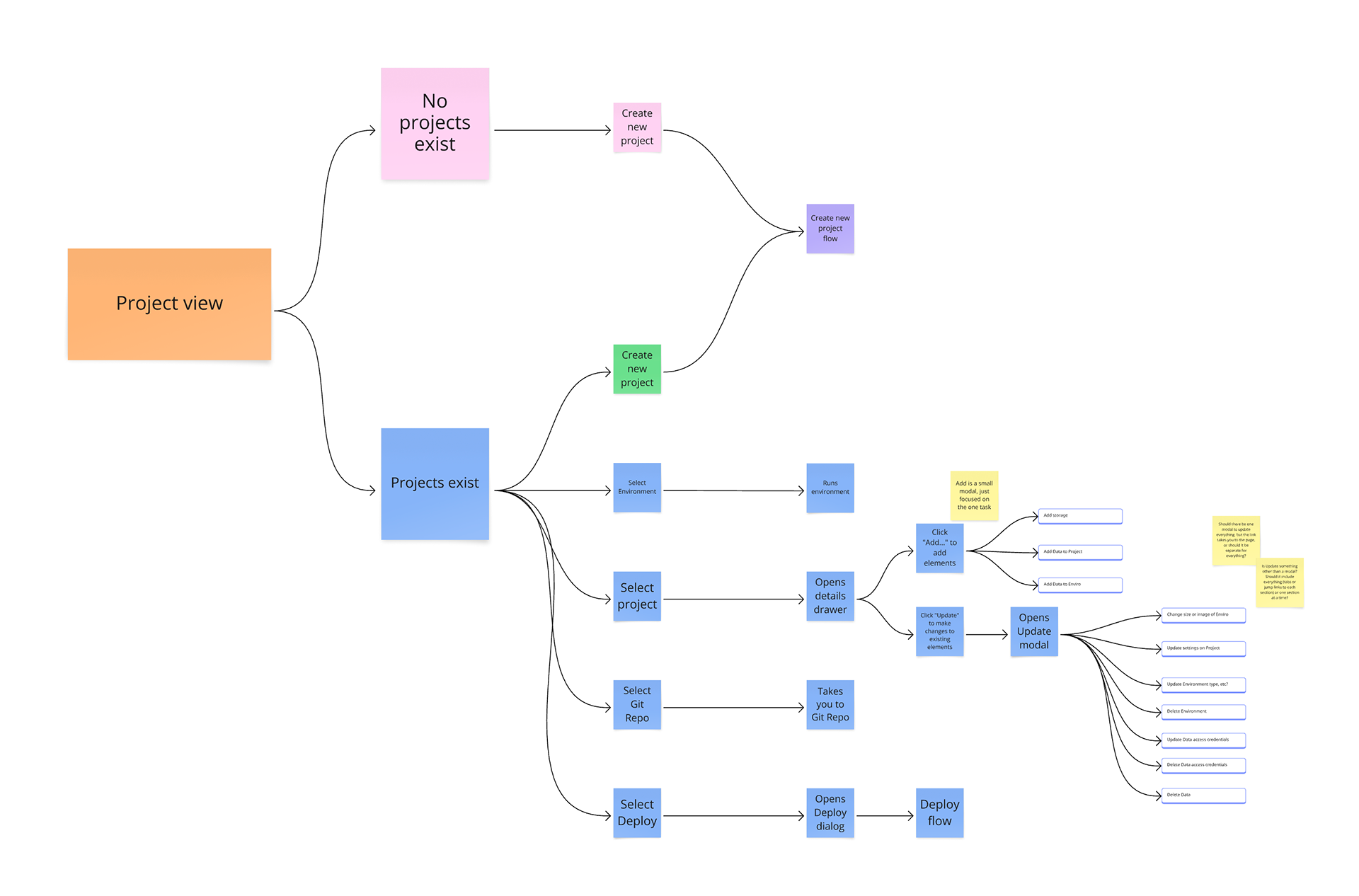
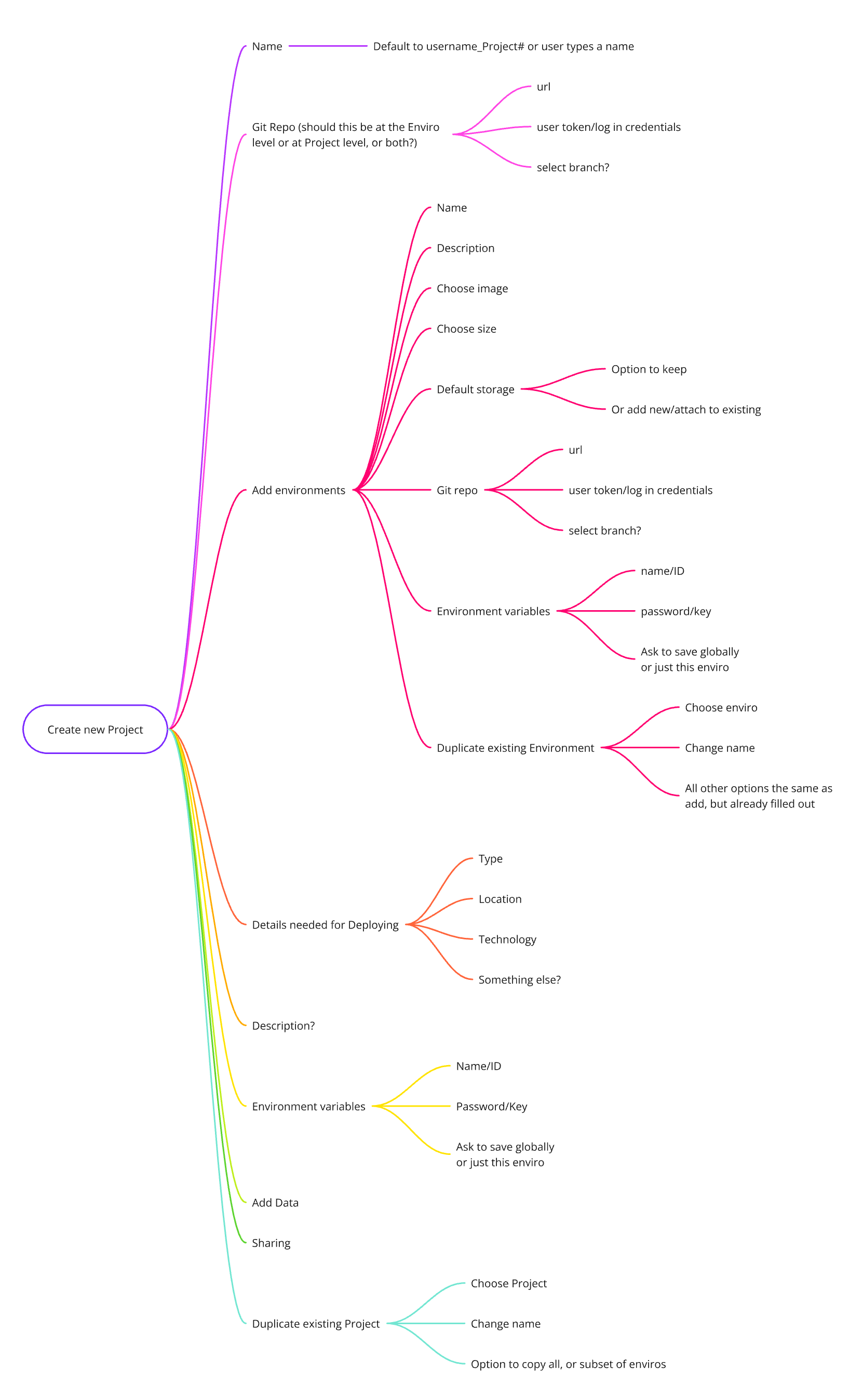
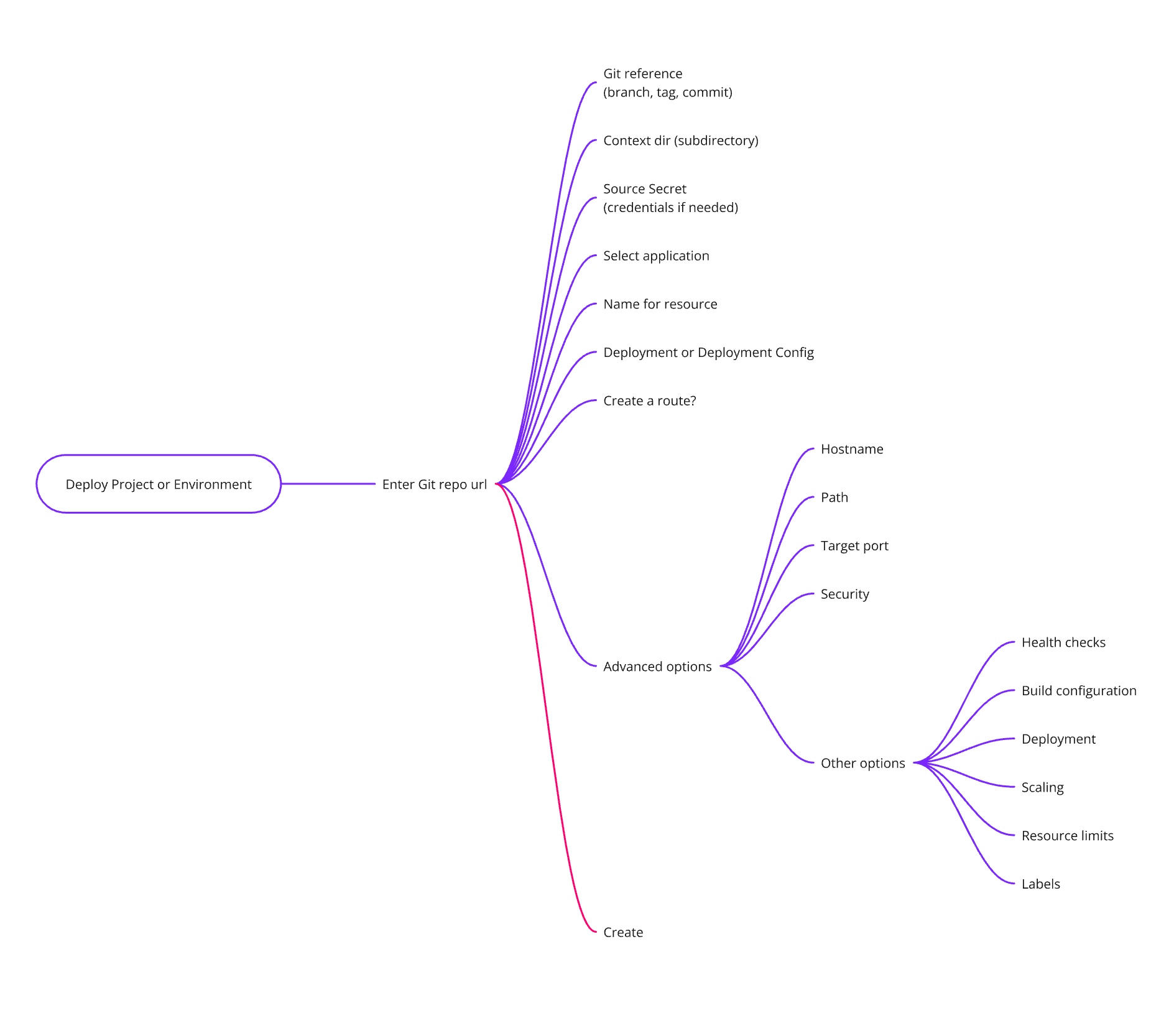
At this point it became clear there was more work than I could accomplish on my own, but to keep moving forward with the designs I focused on the project creation. Working with management, I was able to identify why we needed another designer and after a couple of months I was able to bring another designer onto the product. We split the work that was needed between us, and I stayed the lead of the product and the point of contact for UX issues.
Project View Design & Testing
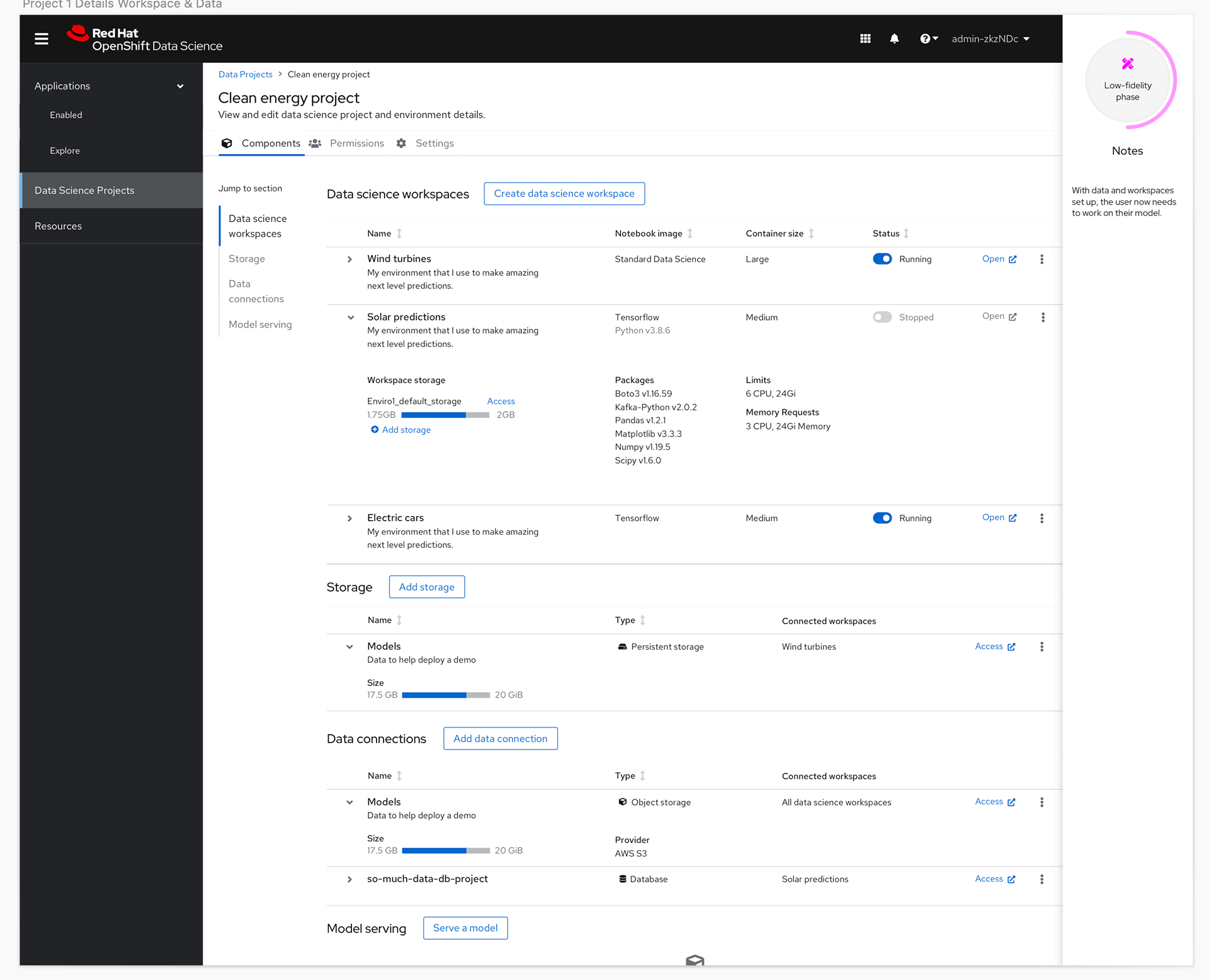
The project view would become the user's main touchpoint for the product, so we started by interviewing some internal data scientists to get an understanding about what they expected a full-service product to include. From there, using the original designs I had done for the MVP as a starting point, I expanded on the designs while having iterative weekly design feedback sessions with stakeholders.
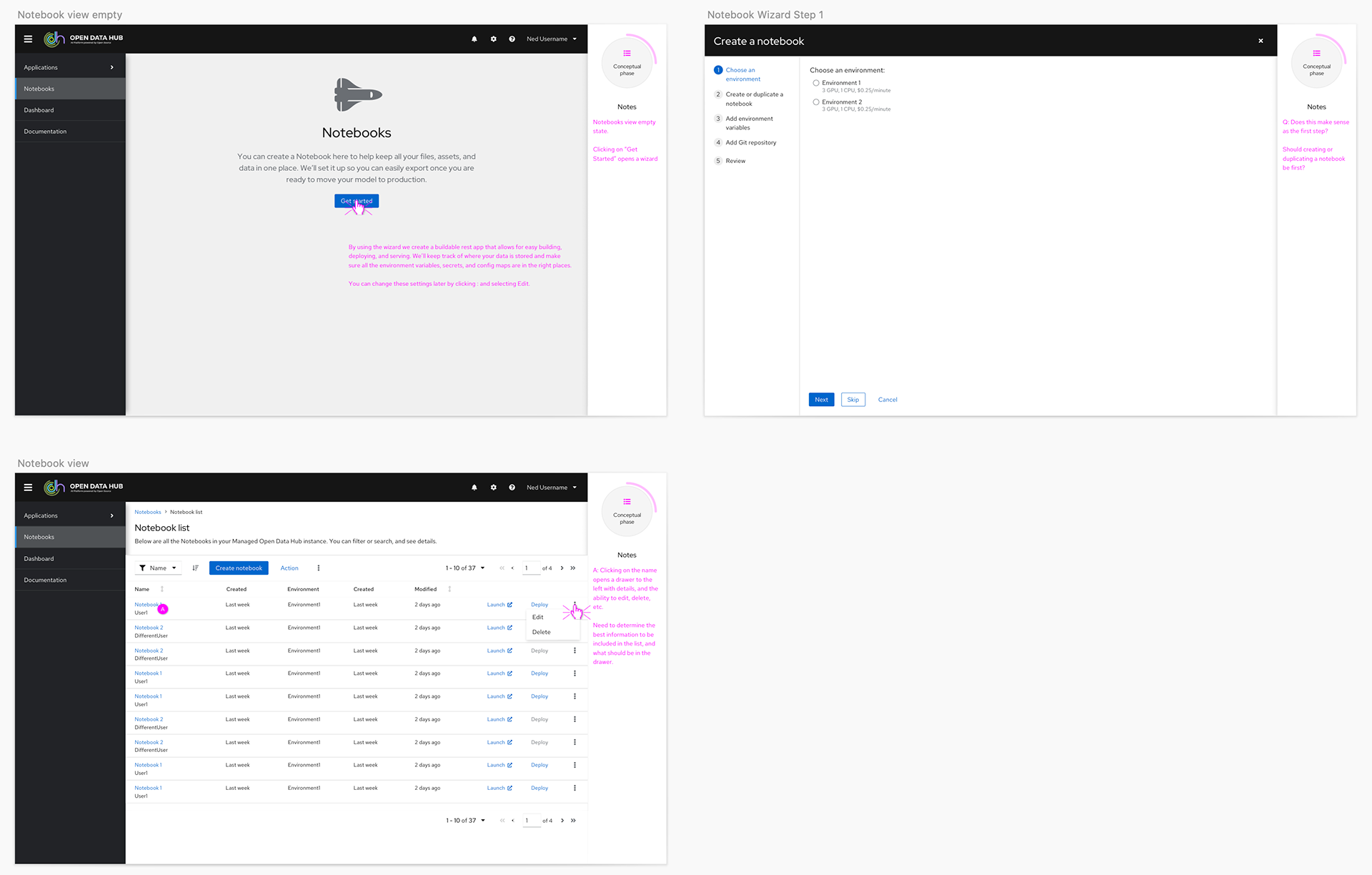
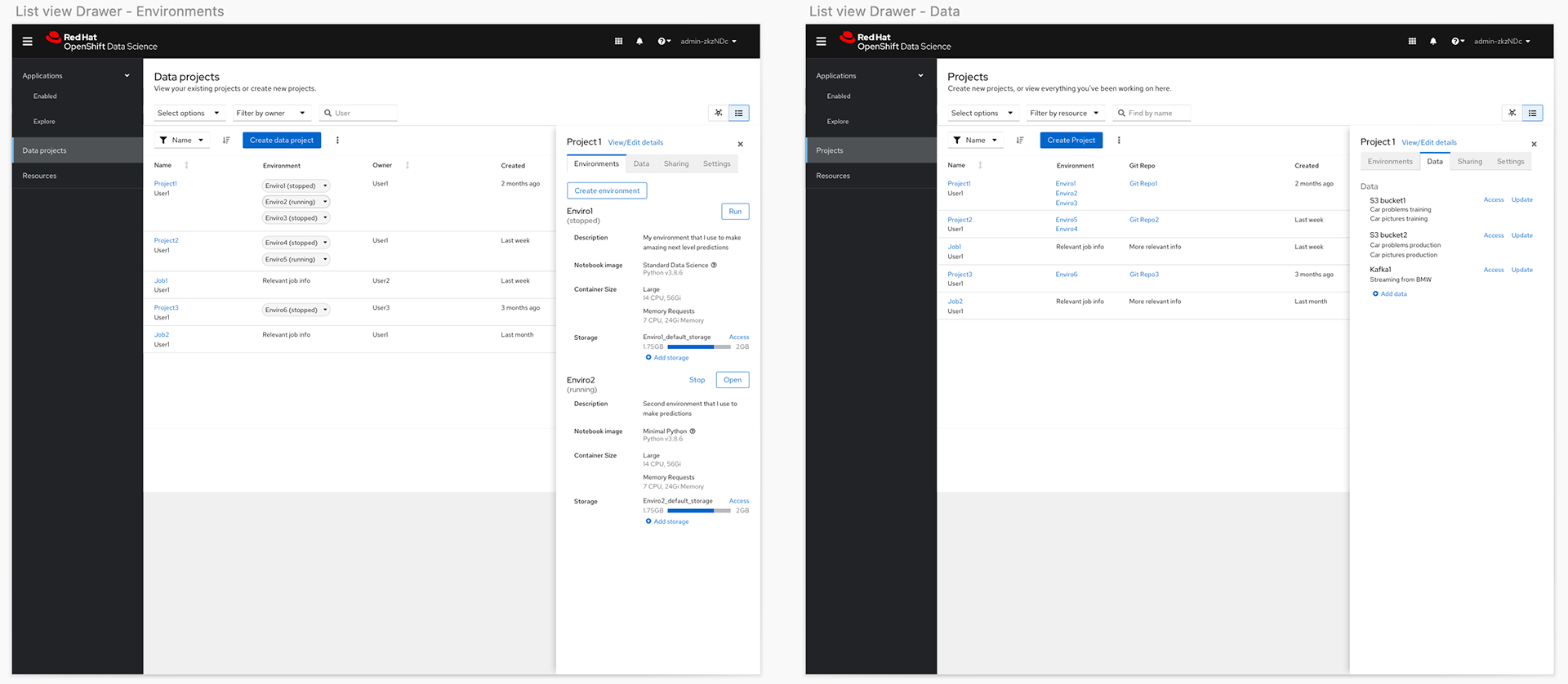
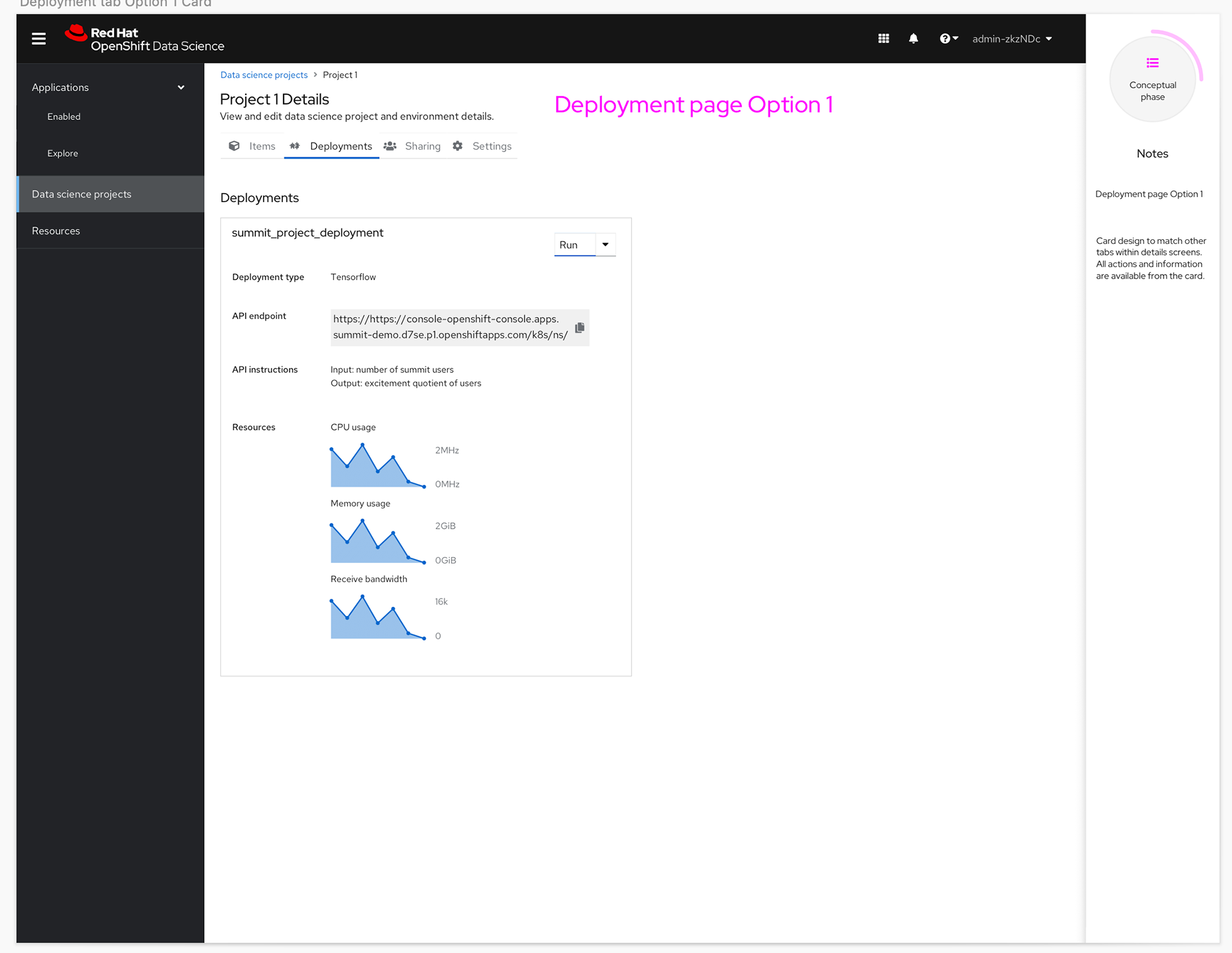
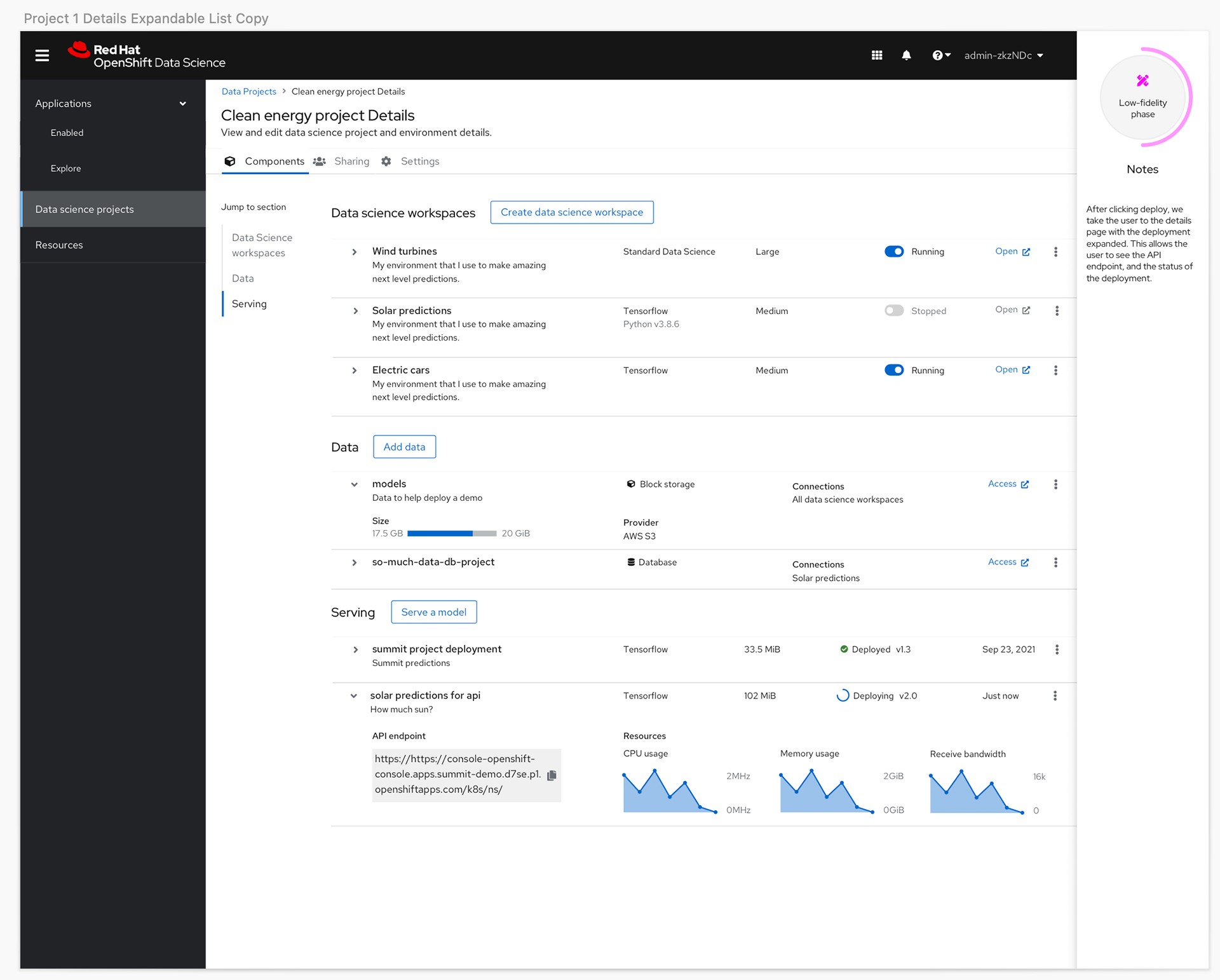
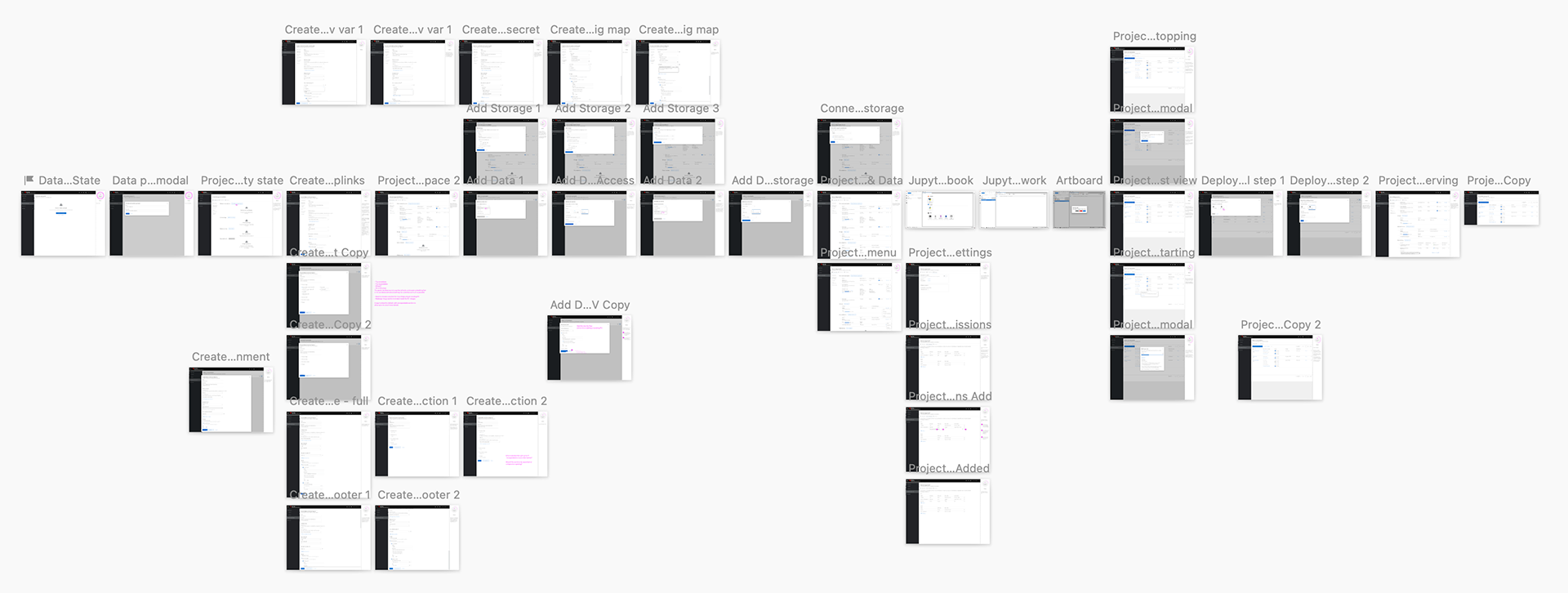
Working with UX Research we conducted a usability study on some early prototypes. This allowed us to understand some issues we hadn't seen before, but happily they were pretty minor. After we fixed the minor issues, using our contacts at a couple of key early access customers we were able to get critical feedback that helped us to refine the designs further and create a full flow. Over a number of months I worked very closely with engineering to implement the full flow and compromise where appropriate to make sure it would both get in the product and perform well for the user.
After the implementation of the project view, we did another round of testing so we could learn how we did and be able to improve in the future.
F2F Meeting and Team Expansion
The engineering team had grown considerably at this point, and there wasn't a clear plan for how the product was going to serve the users beyond a plan to keep adding more functionality. To help the team understand this, as well as to work on organizational updates, I proposed another F2F.
The idea was very well received, so we started planning to meet in a couple of months. During this F2F we dove deeper to get an understanding of some new users leadership wanted to target, and then discussed the user's goals and desired outcomes. This would help us identify the best way to present new features to the myriad number of users the product leadership wanted to target.
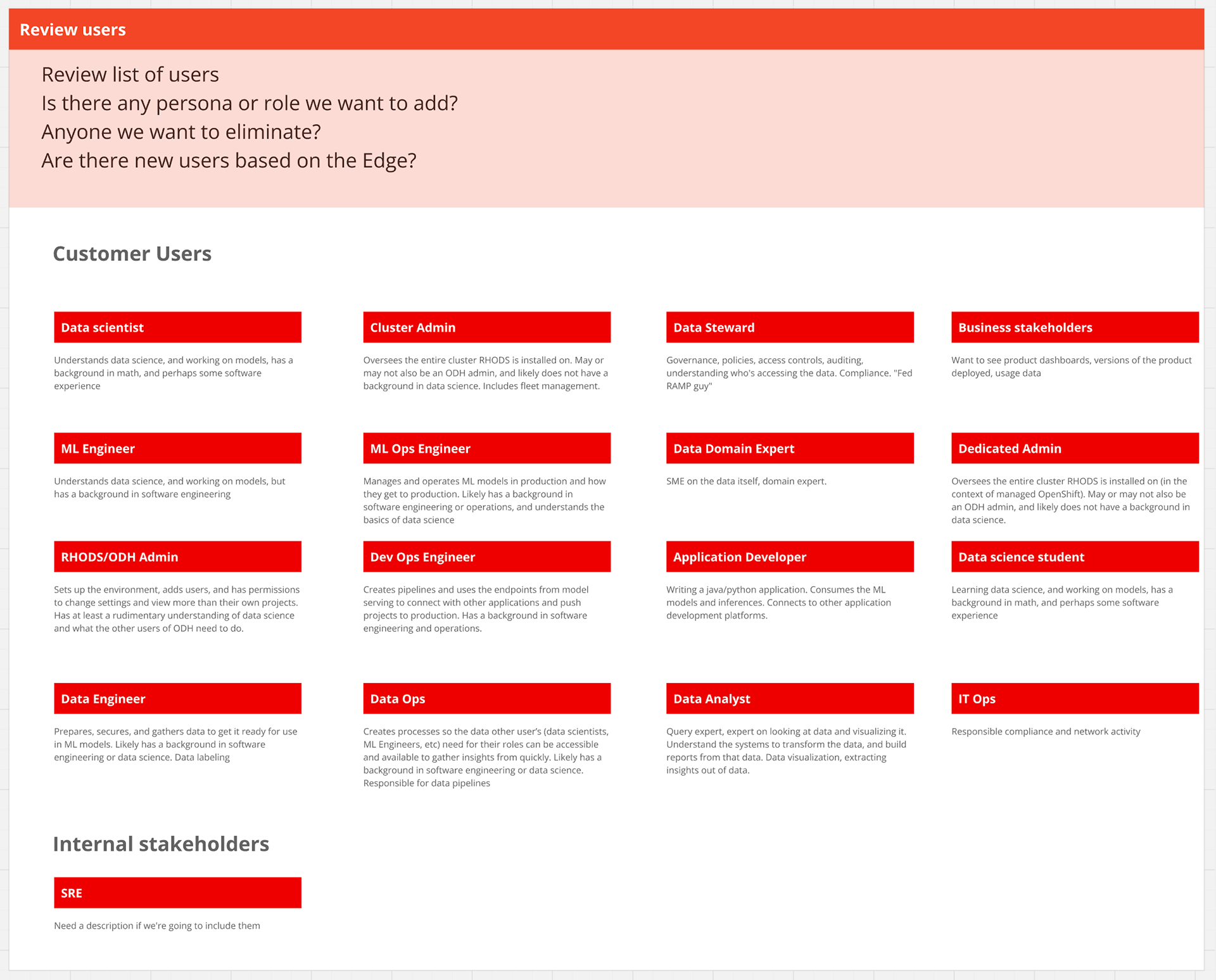
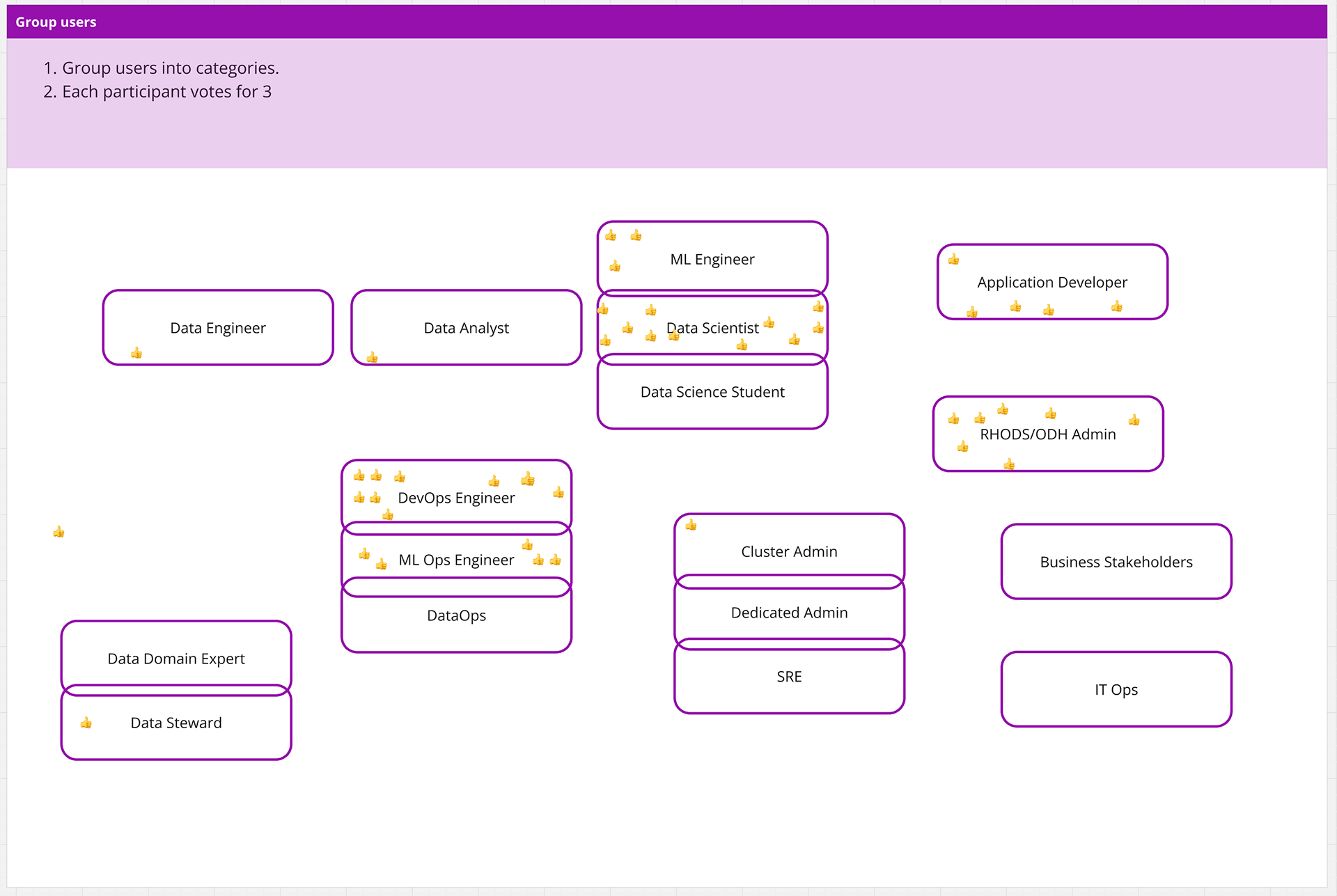
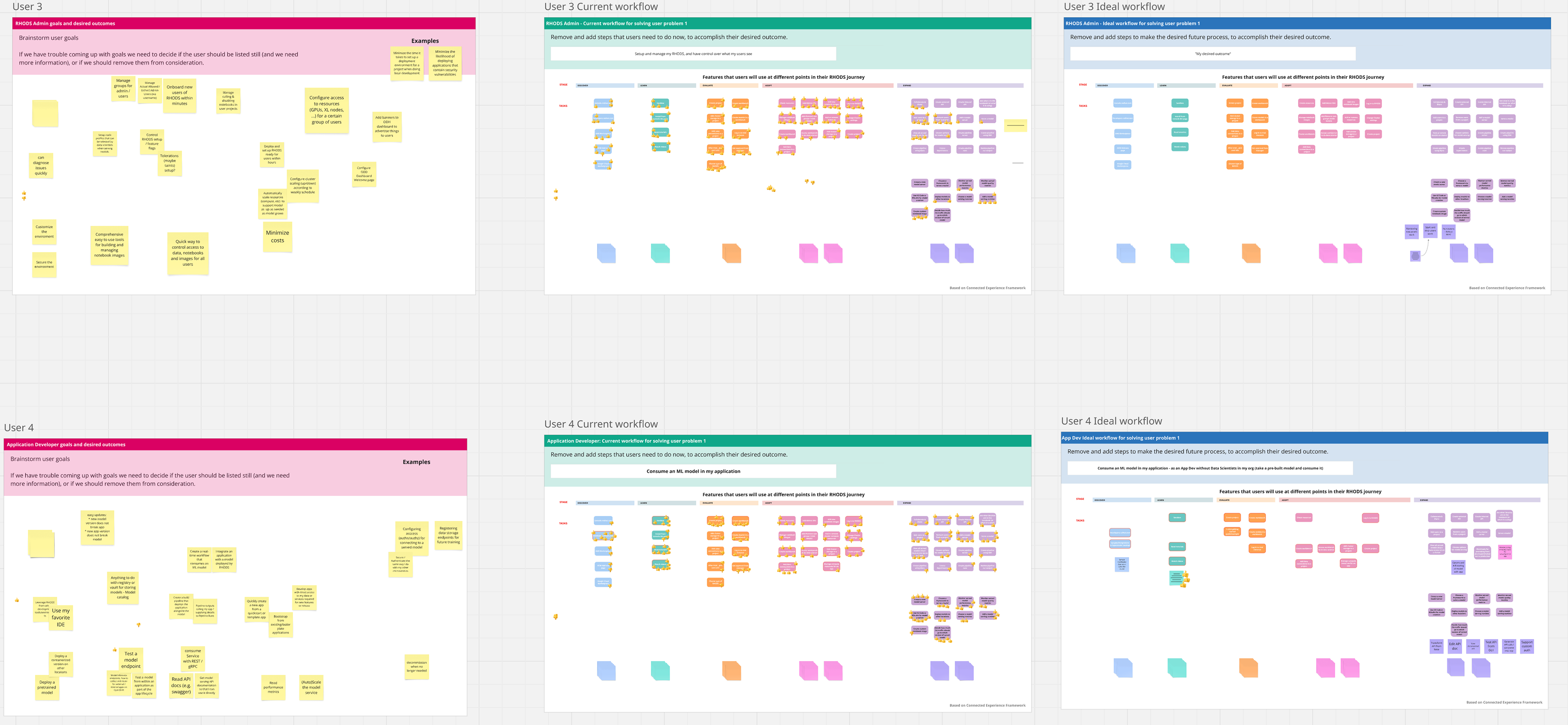
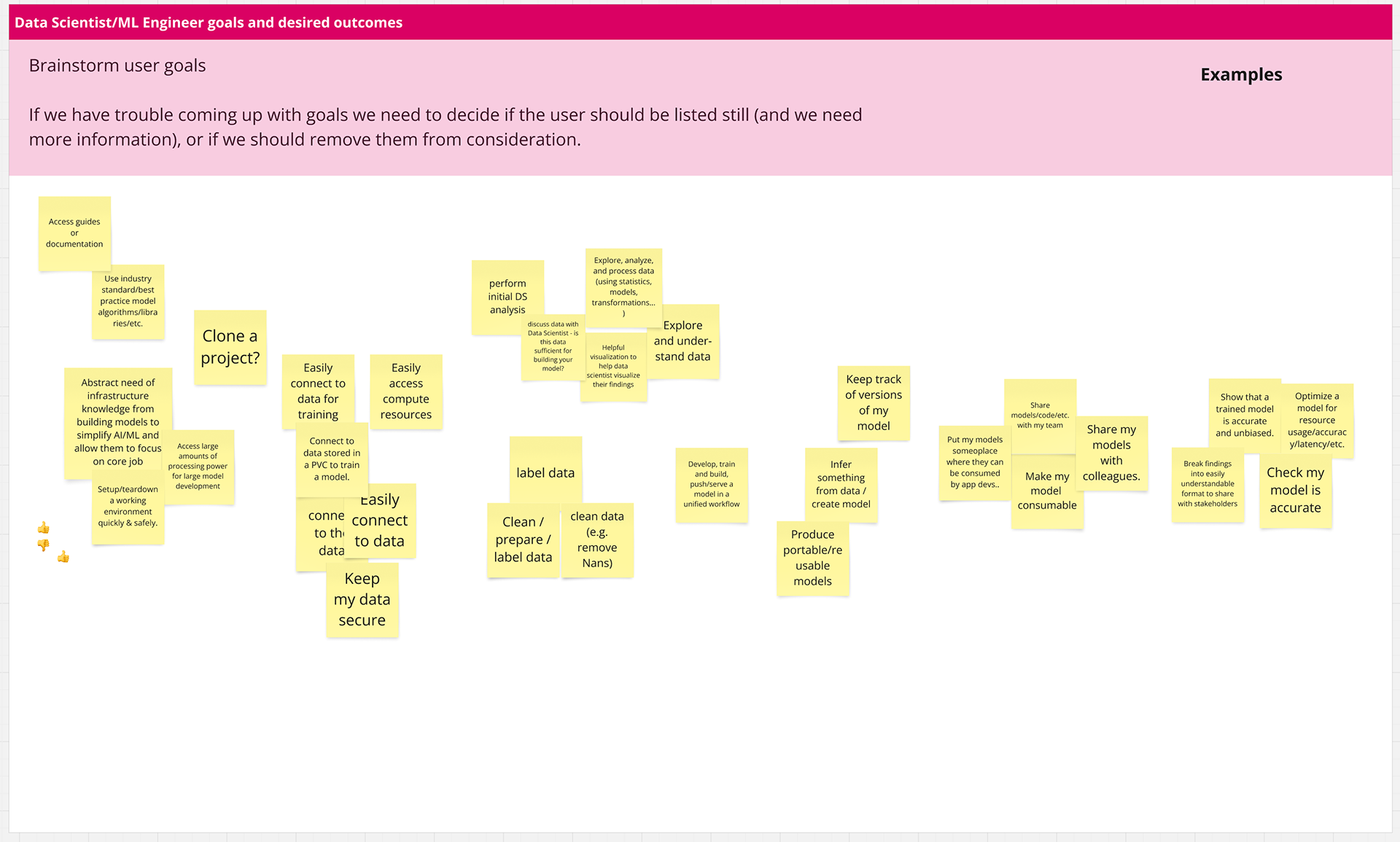
Given the success of the product up until this time, we were told during the F2F that the team would go through a round of rapid expansion over the next few months. We would add six more designers in addition to the two current UX designers, one content designer, and a dedicated UX researcher.
Product, Team, & Role Expansion
With all of the new designers joining the project my role expanded farther and I took on more of a coaching and leadership role, rather than a day-to-day design role. With this, in addition to the experienced full time designers, I was able to mentor an intern and multiple new associate designers.
In this new phase of the product we started by adding new features (pipelines, model serving, and multiple settings pages for admin users), doing more research and adding telemetry to the product.
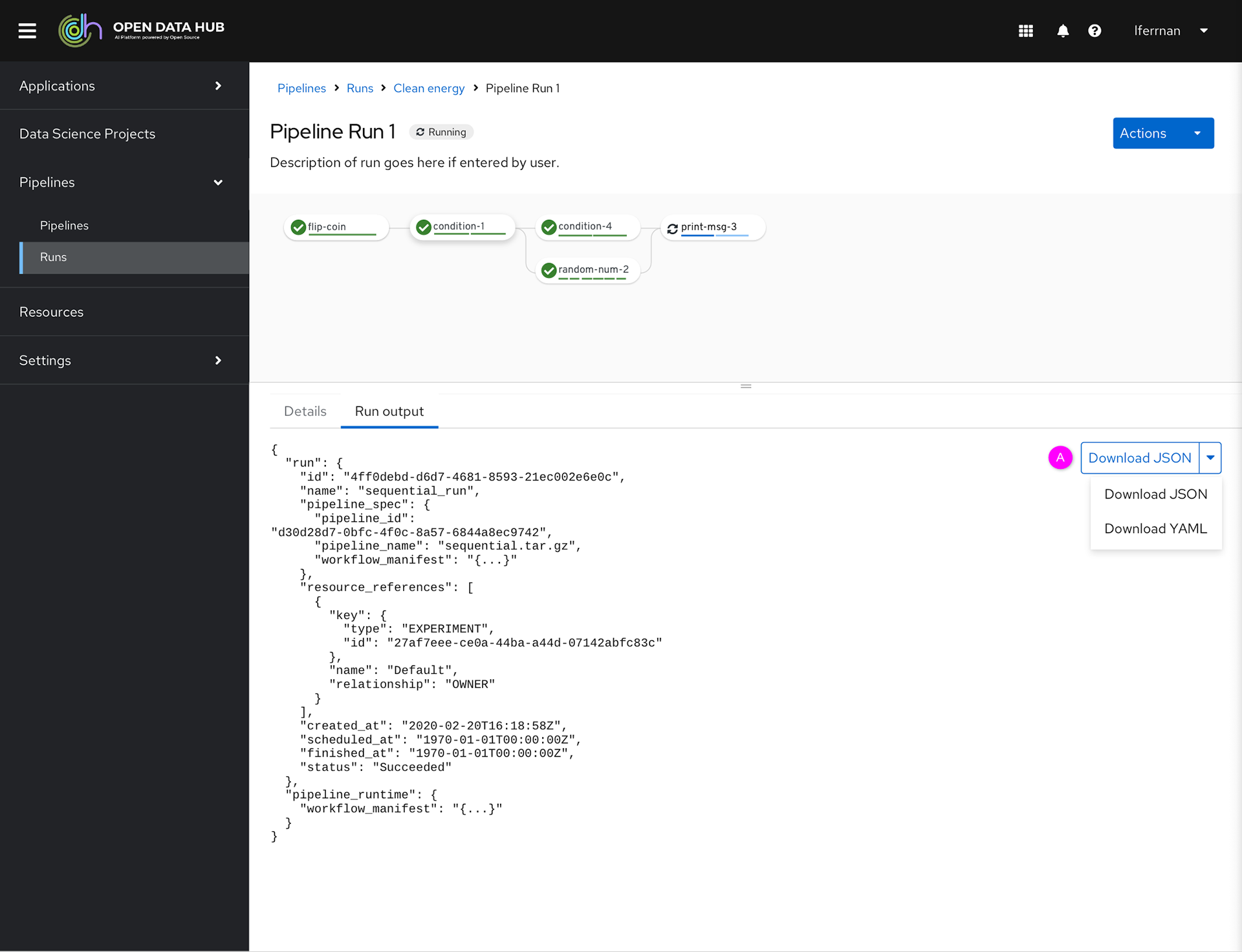
Pipelines
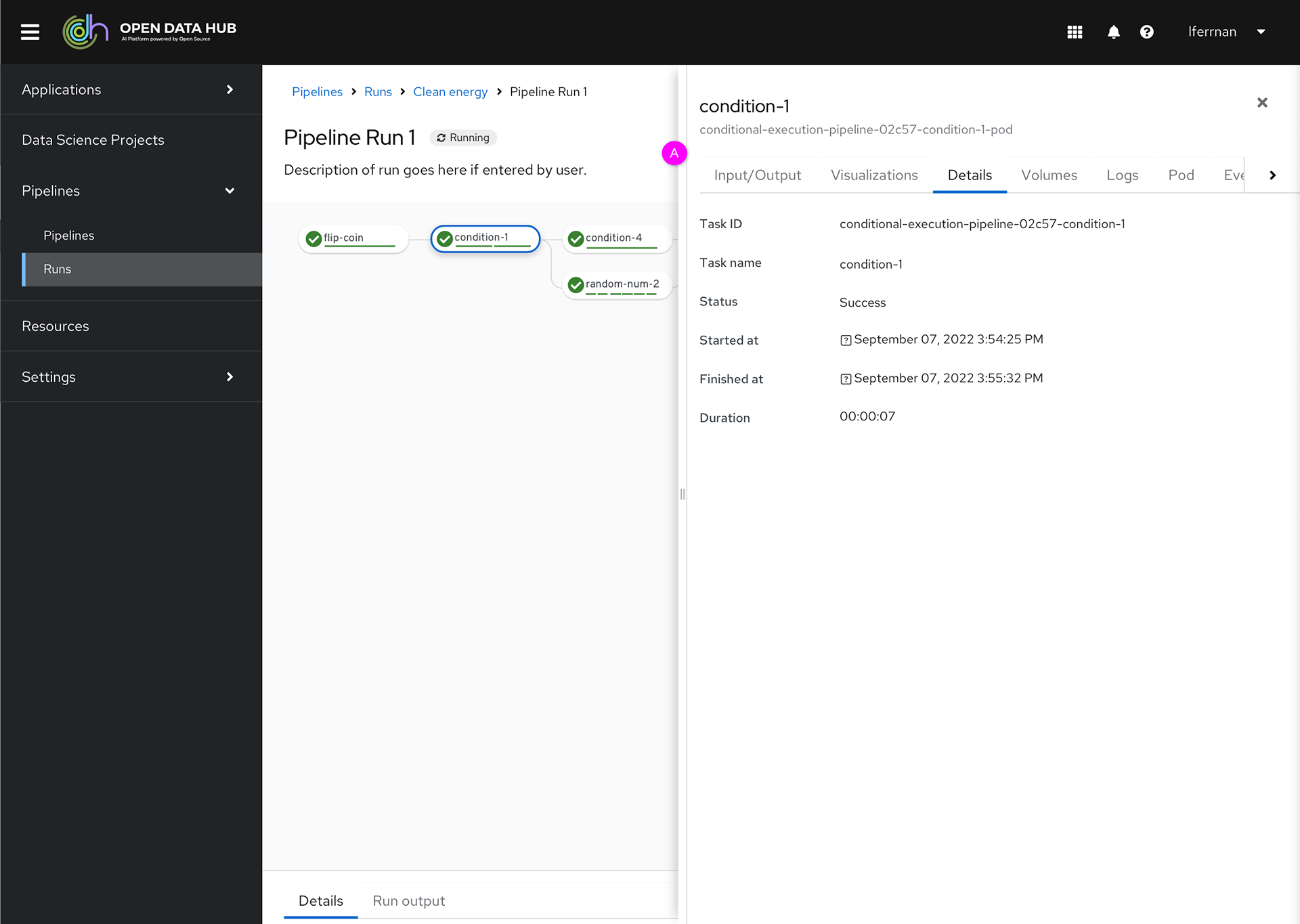
Pipelines
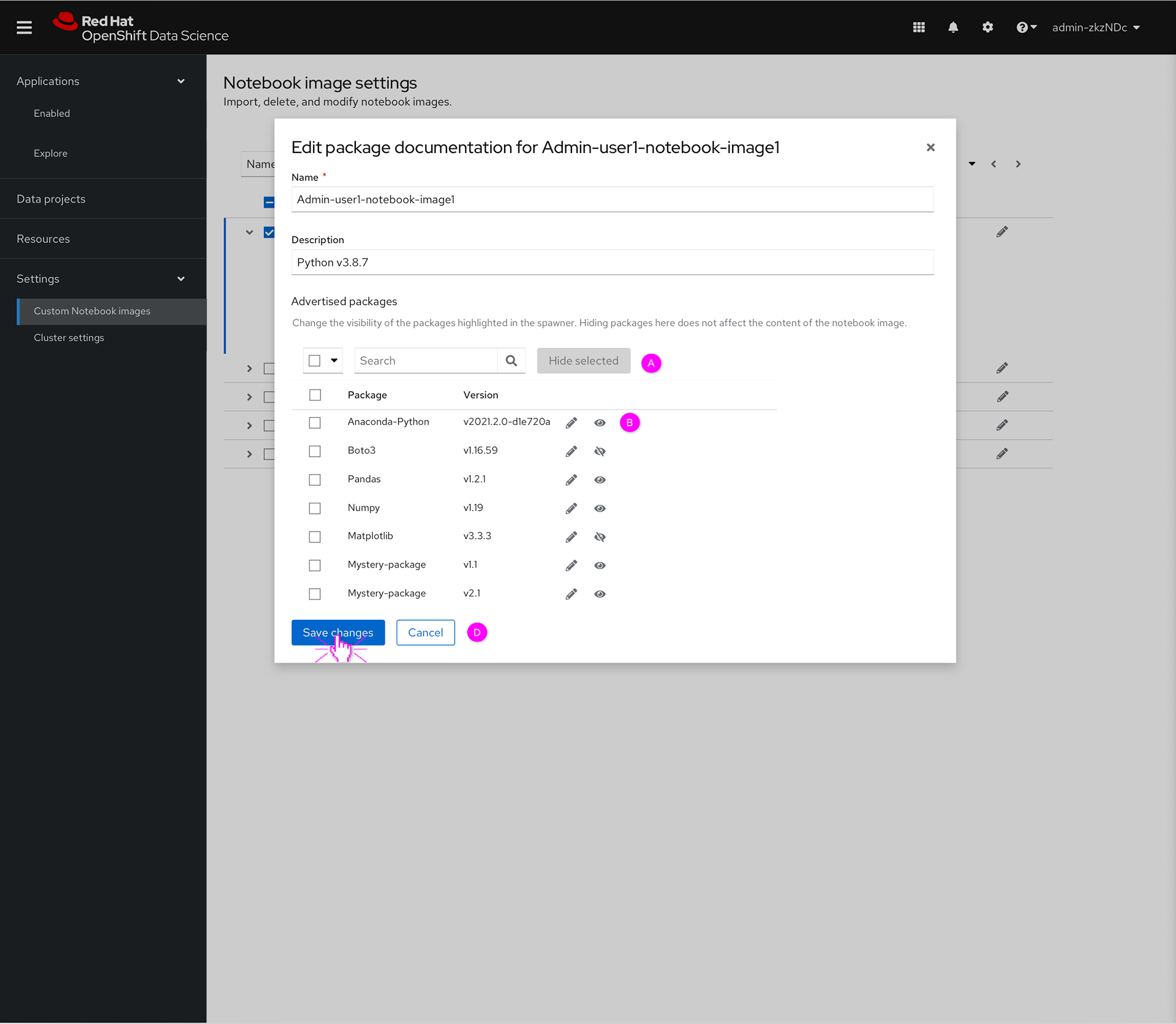
Notebook image settings
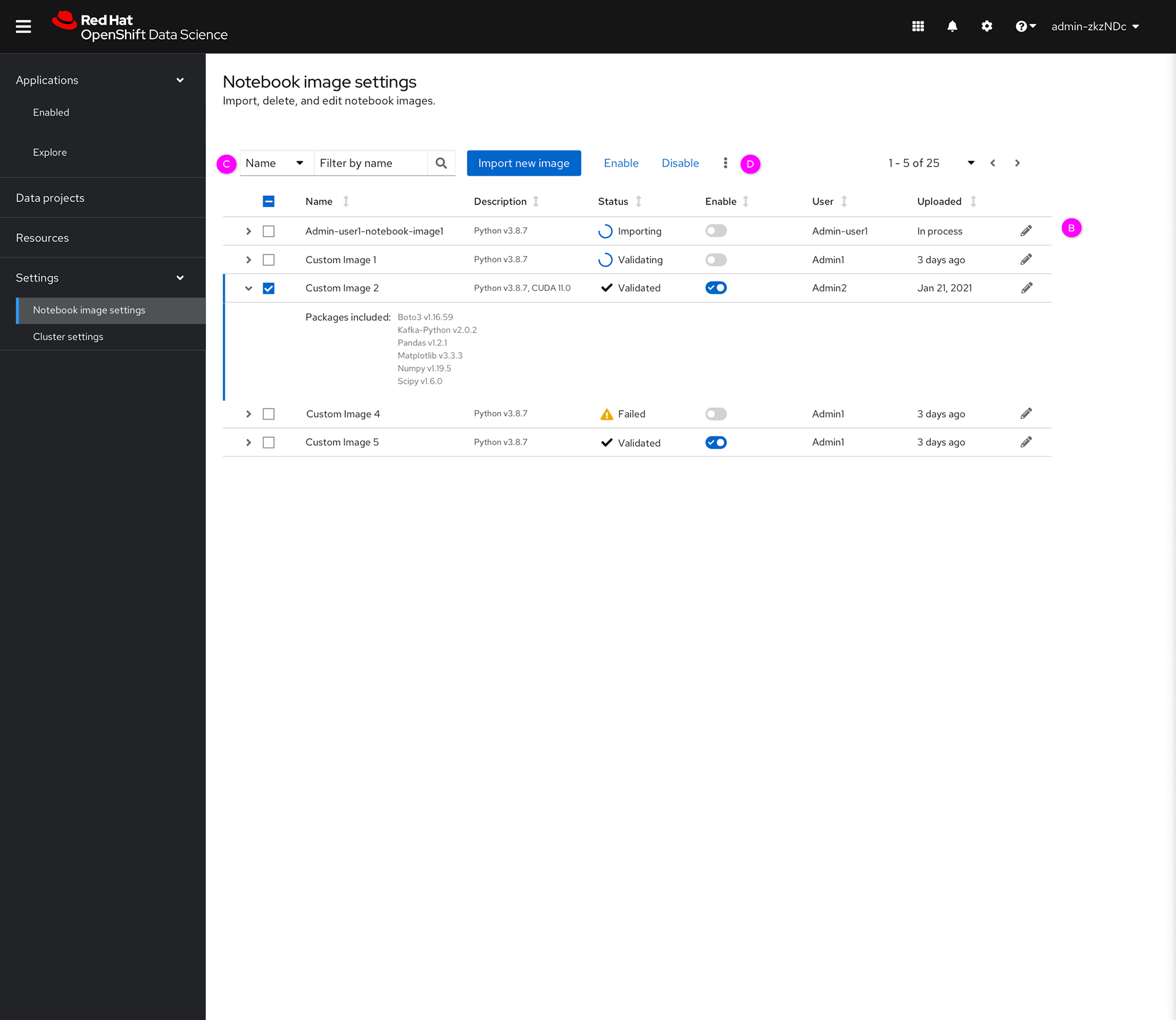
Notebook image settings
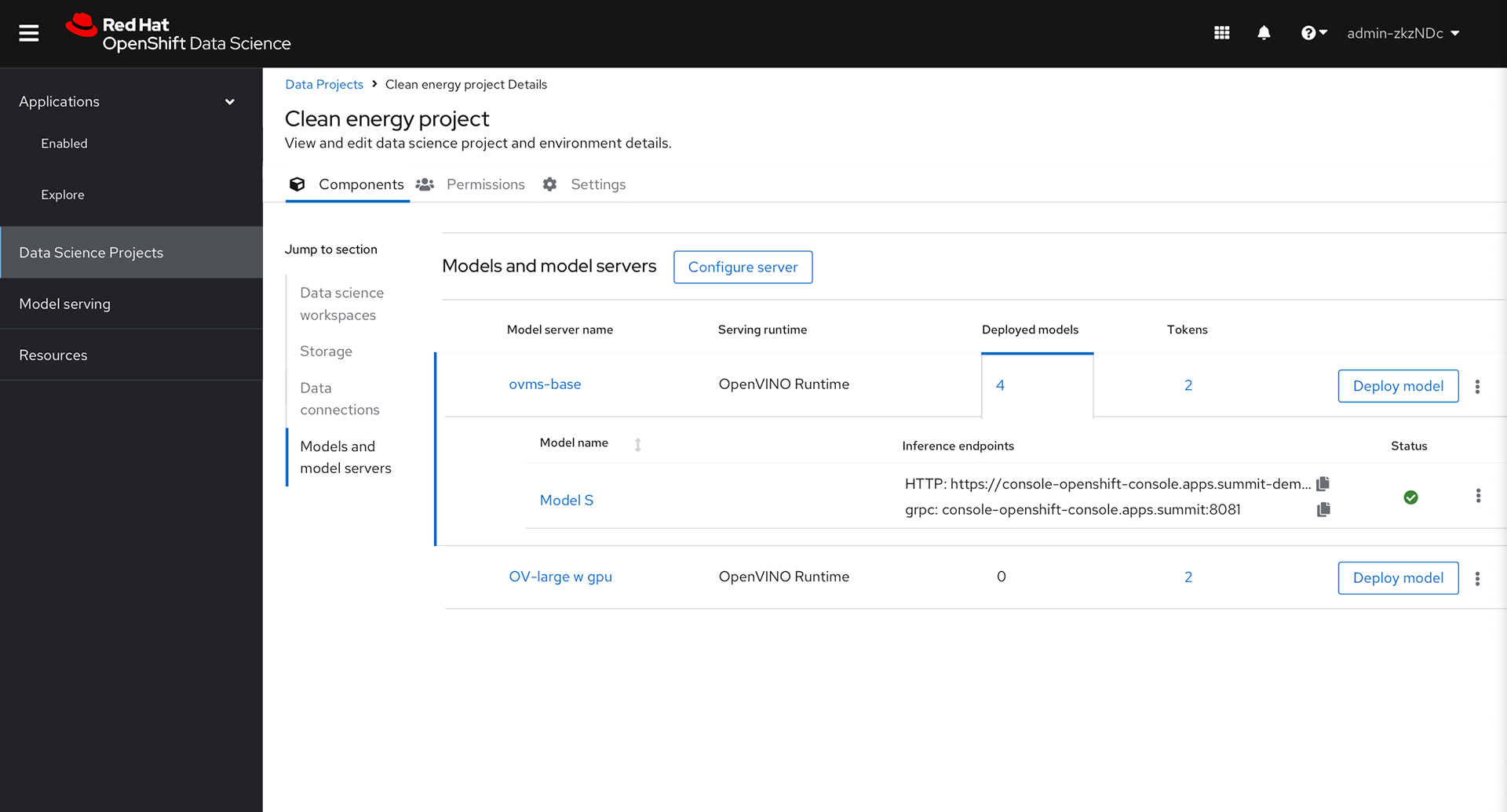
Model serving
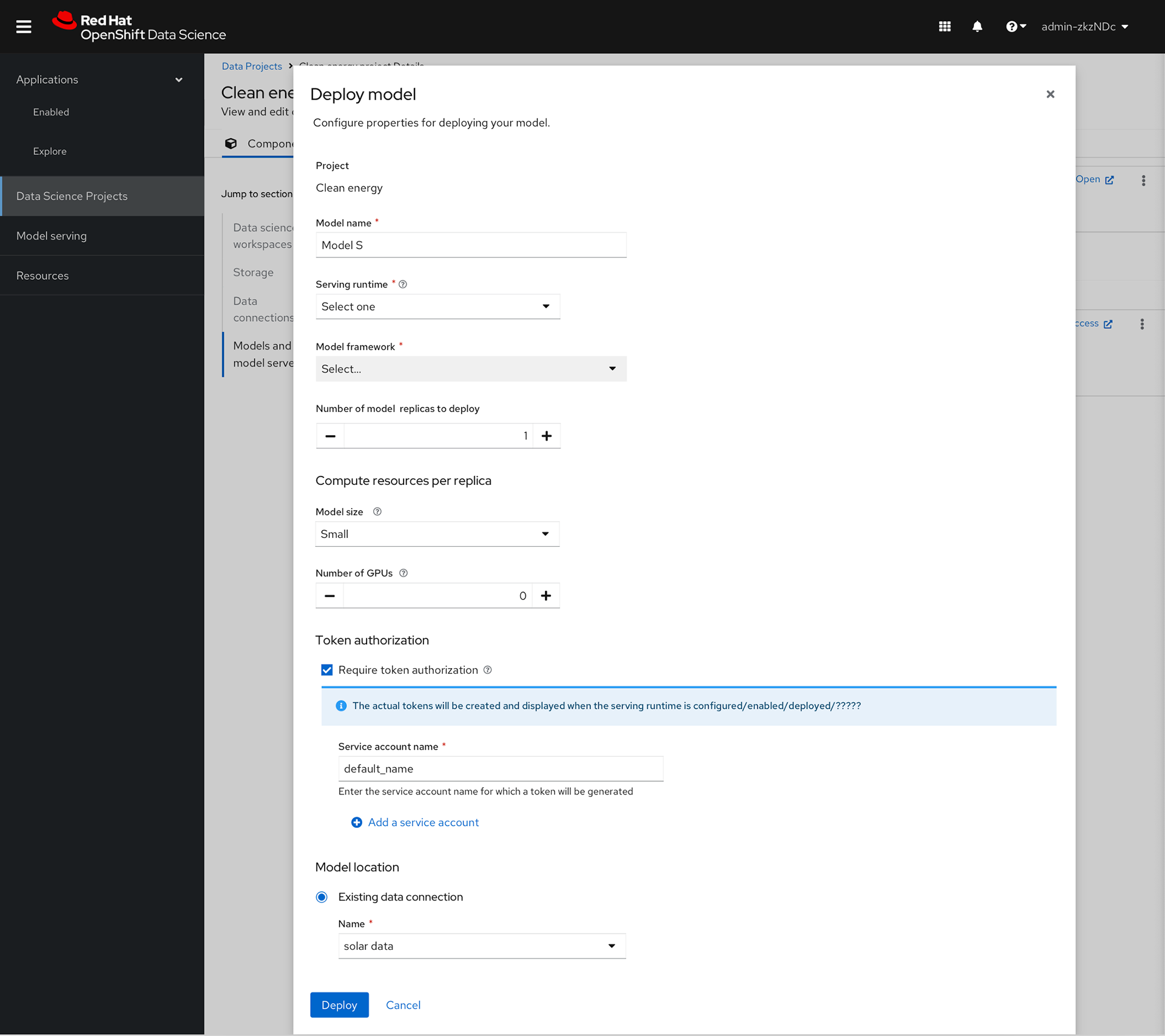
Model serving
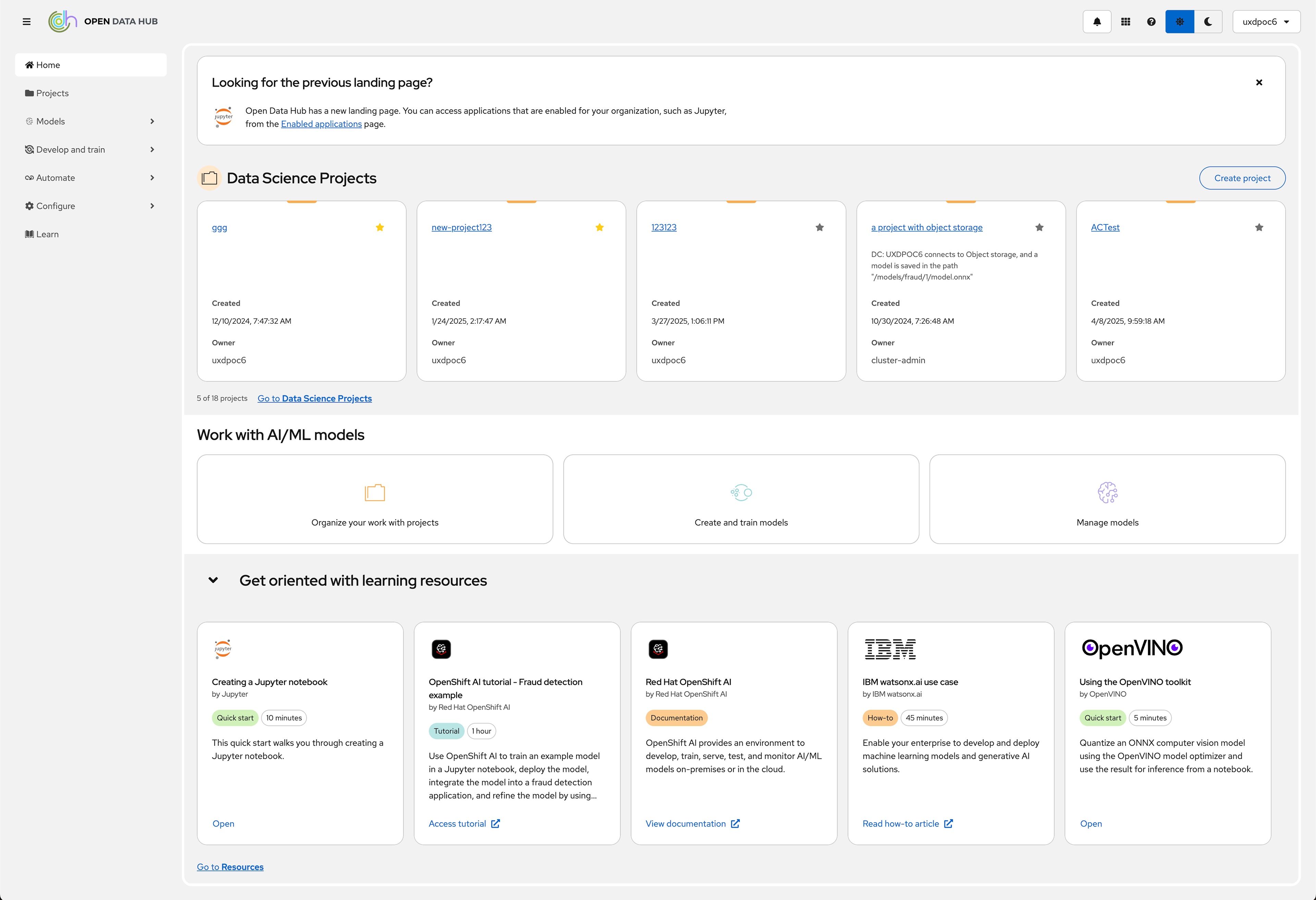
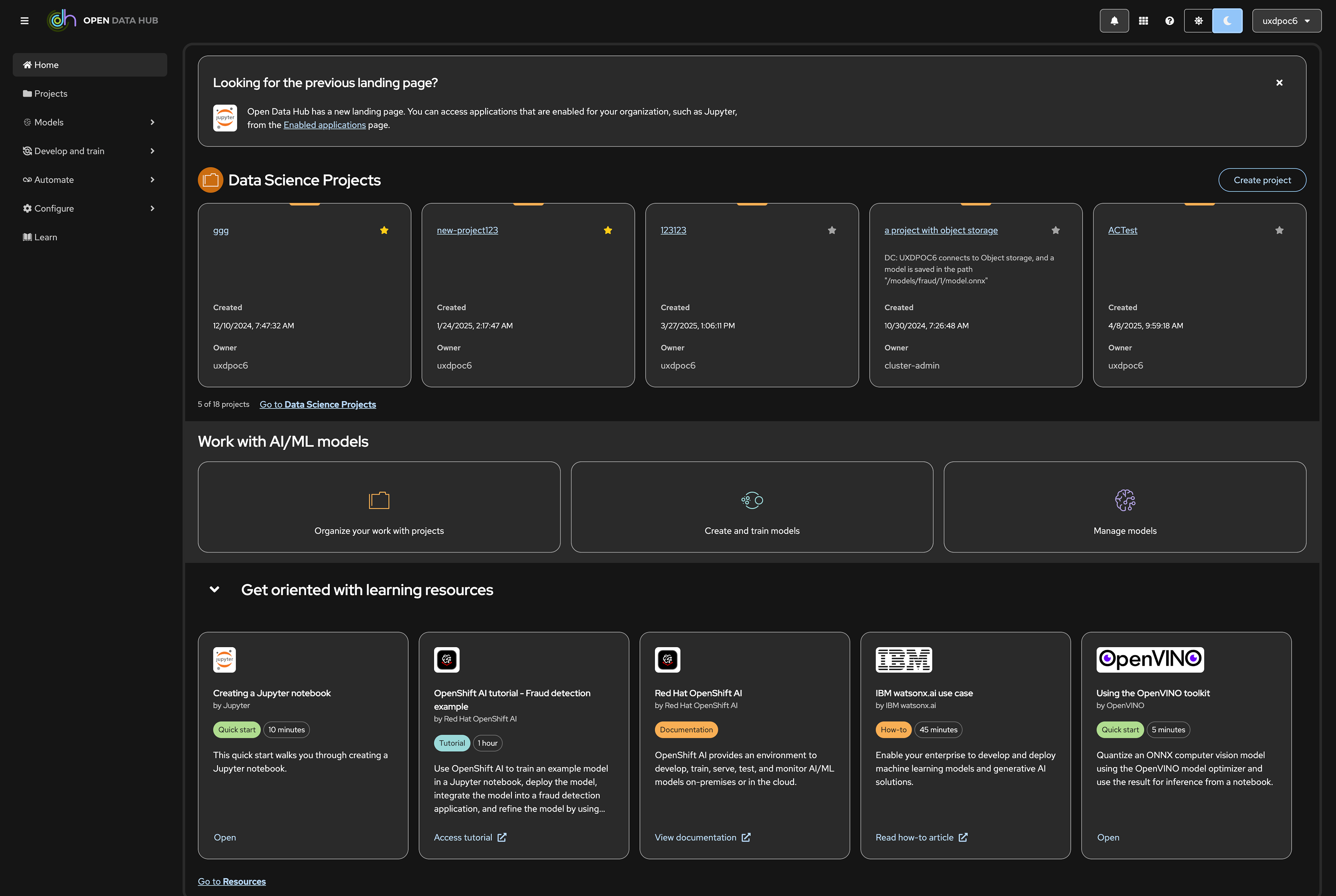
As the product expanded it was becoming clear through conversations with customers, sales, and simply reviewing the product on our own, that wayfinding was starting to be an issue. Newer users needed more direction on how to accomplish their desired tasks now that there were multiple options for them. The product had also now seen enough success that UX leadership wanted it to be a showcase for expanded visual design updates. In order to add both the wayfinding and visual design updates we started work on adding a Home page so users would have an obvious place to land in the product, as well as give them more obvious direction for completing critical tasks.
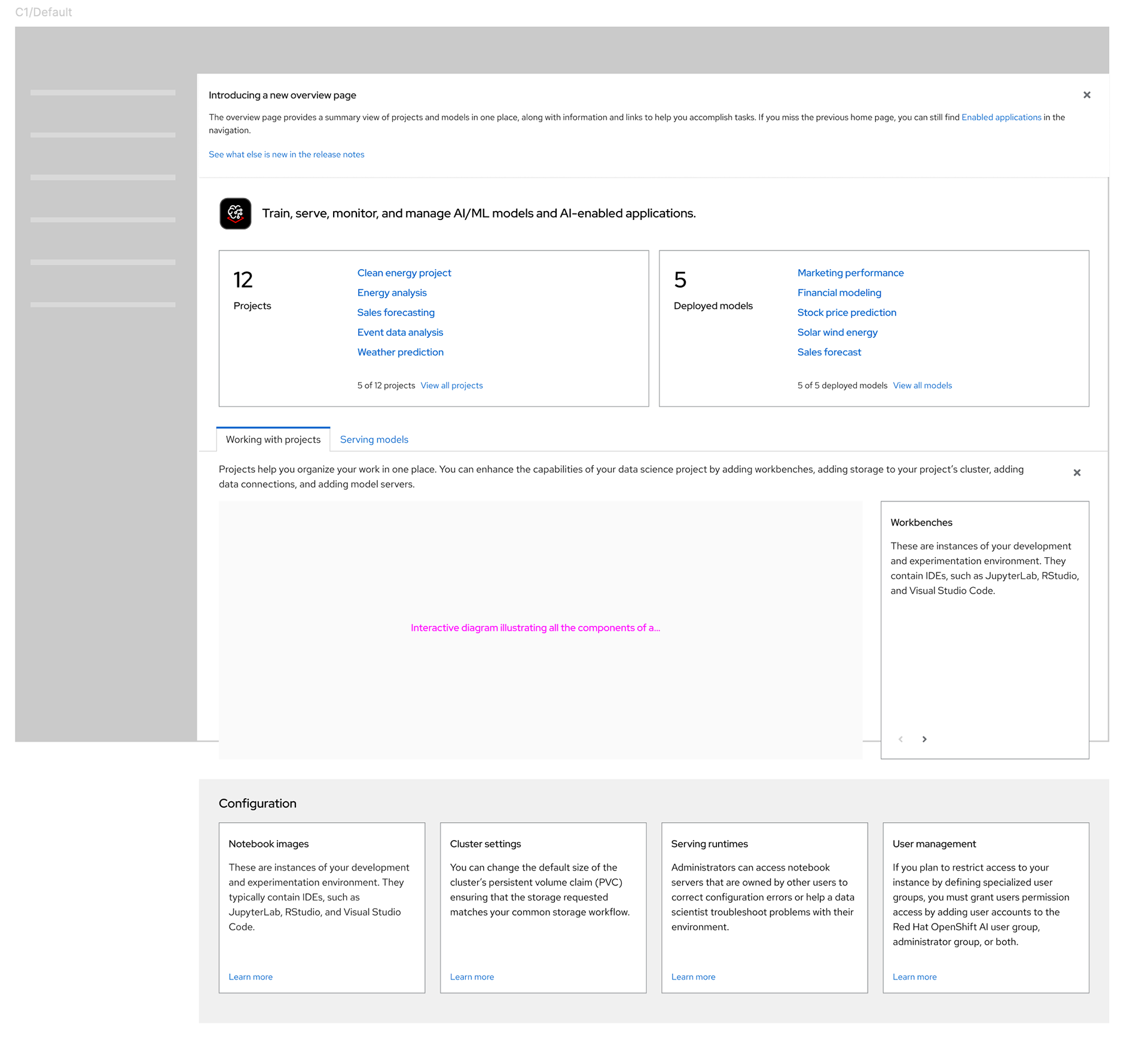
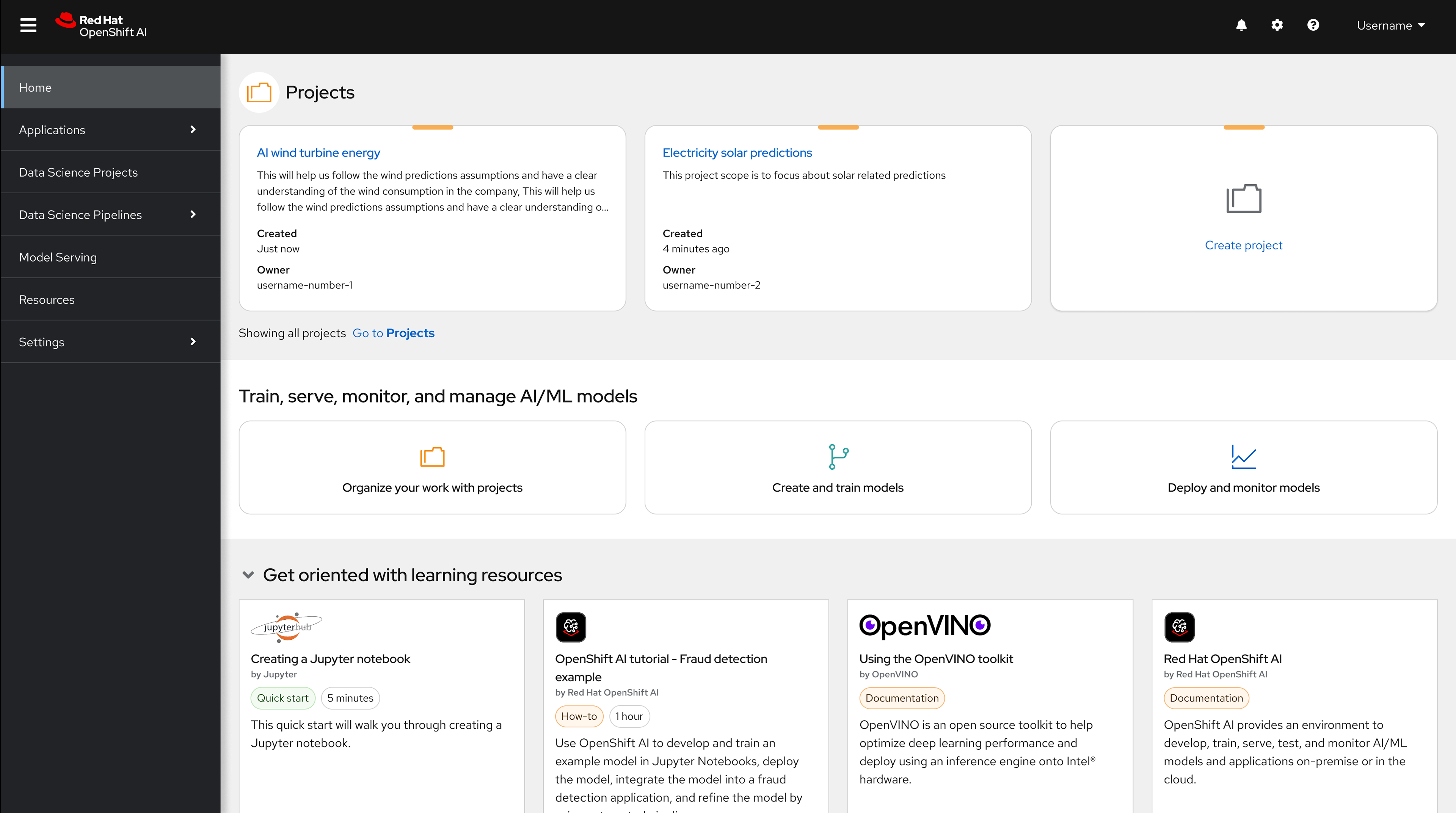
The visual design updates continued with the product being the pilot of Red Hat's updated open source design system, PatternFly, which included both a light and a dark mode.
Future Product Vision
In order to expand our reach to work on a future product vision, I began working with a new UX architect, a senior principal UX designer and an additional UX researcher to interview multiple external data scientists to understand both their met and unmet needs with existing AI/ML tools.
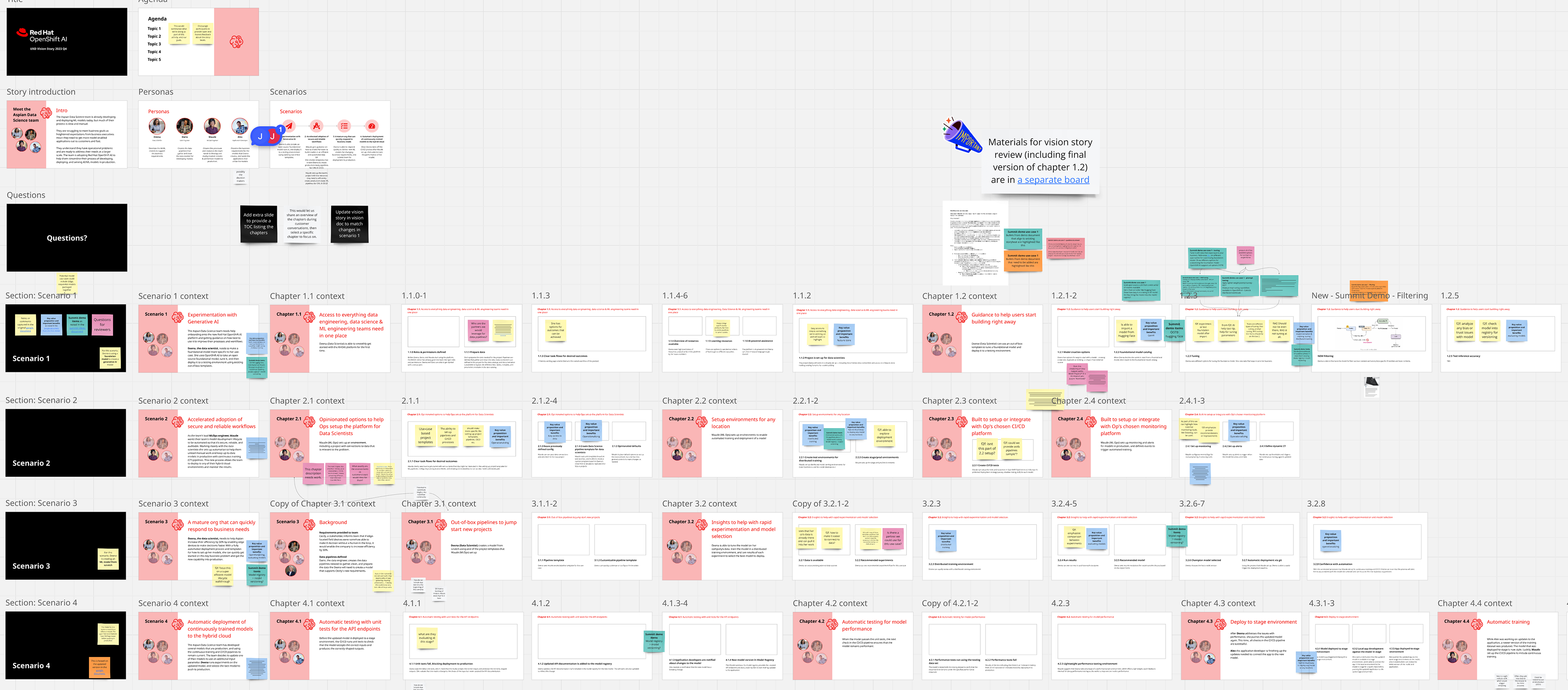
After creating this needs analysis we gathered the new group of UX leads together to imagine a future vision for the product.
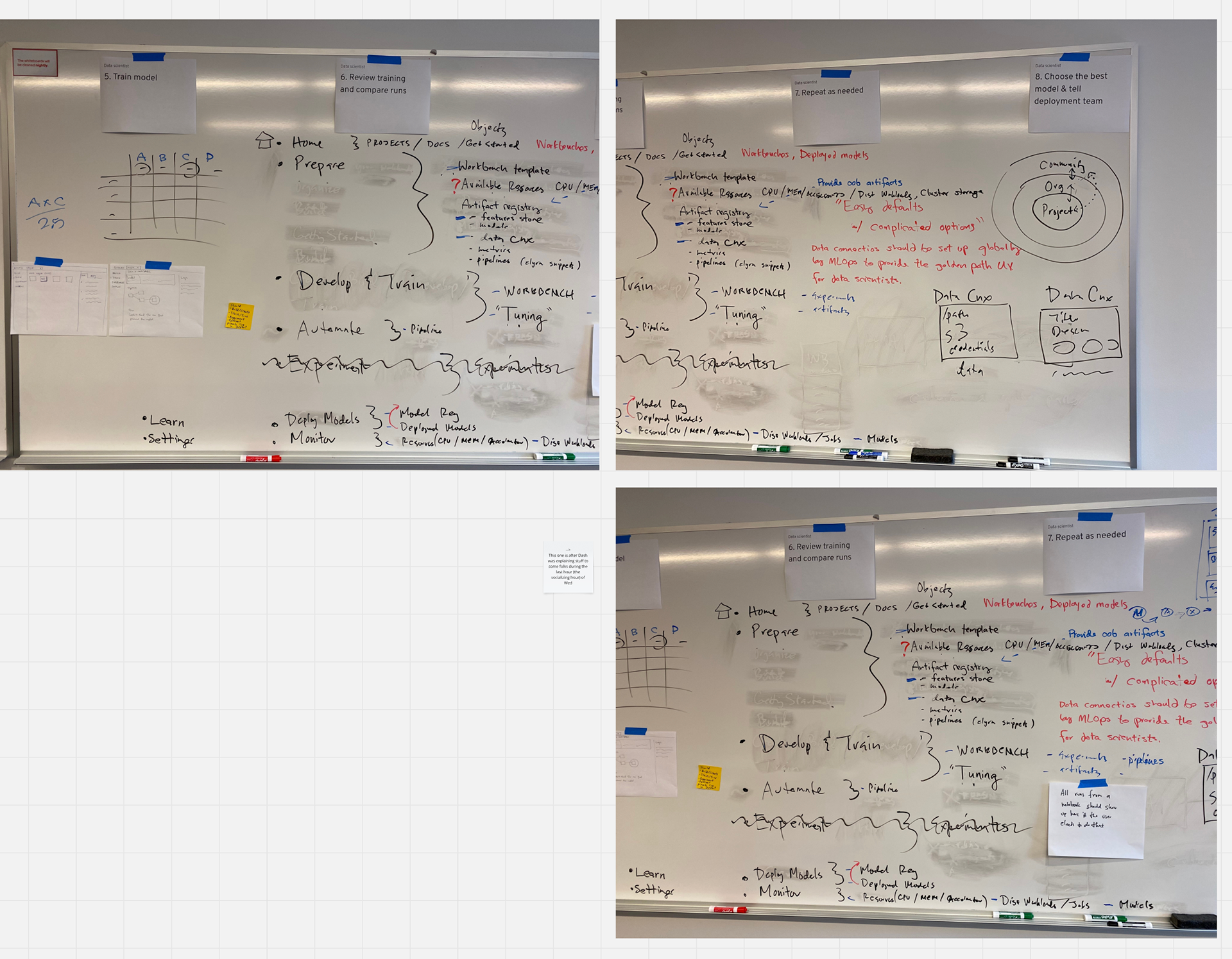
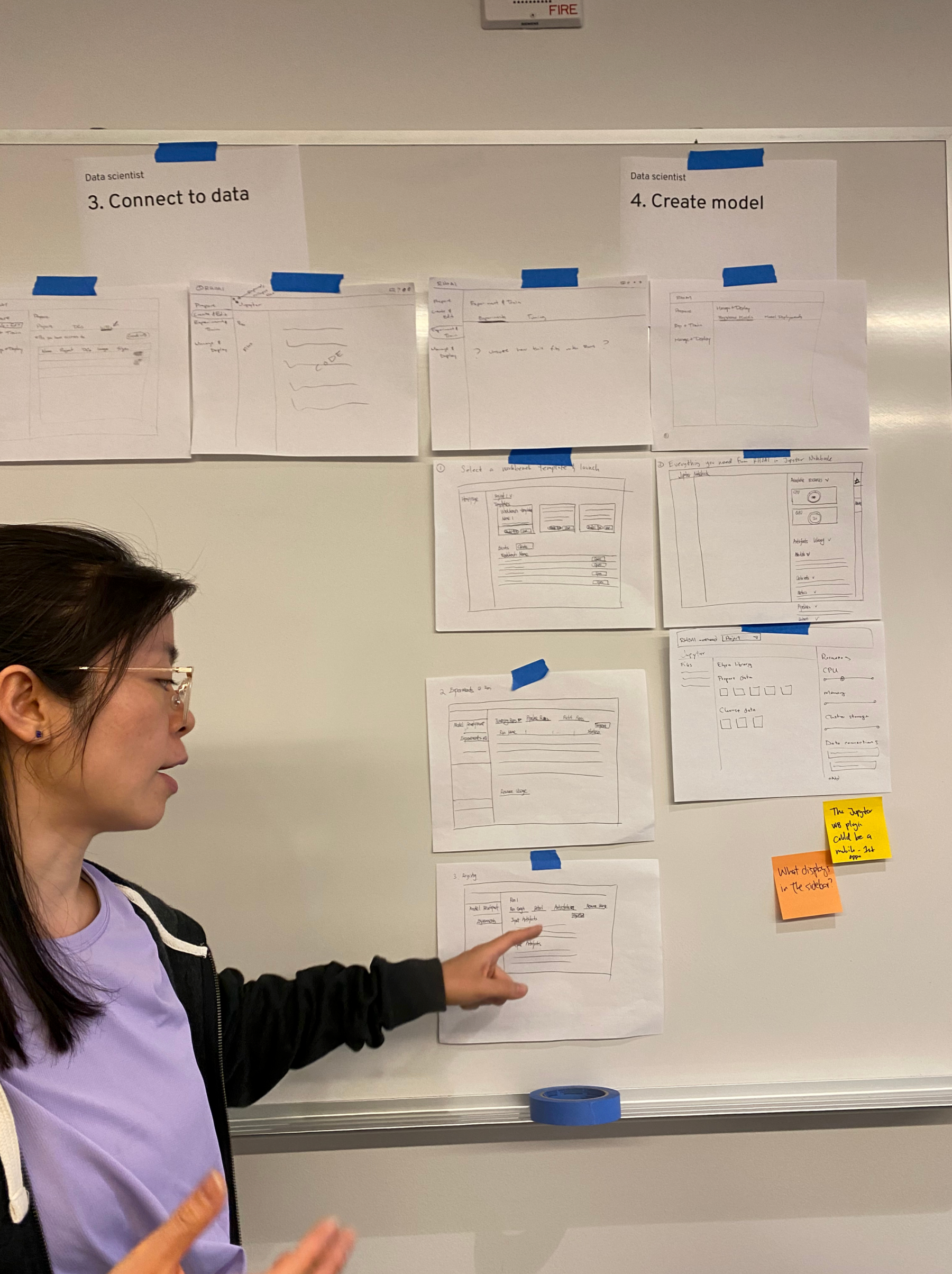
Using those concepts as the foundation we then involved the entire design team, from the most junior to the most senior, to brainstorm ways to complete that vision and allow the team some time to get away from the day-to-day feature work and stretch their legs.
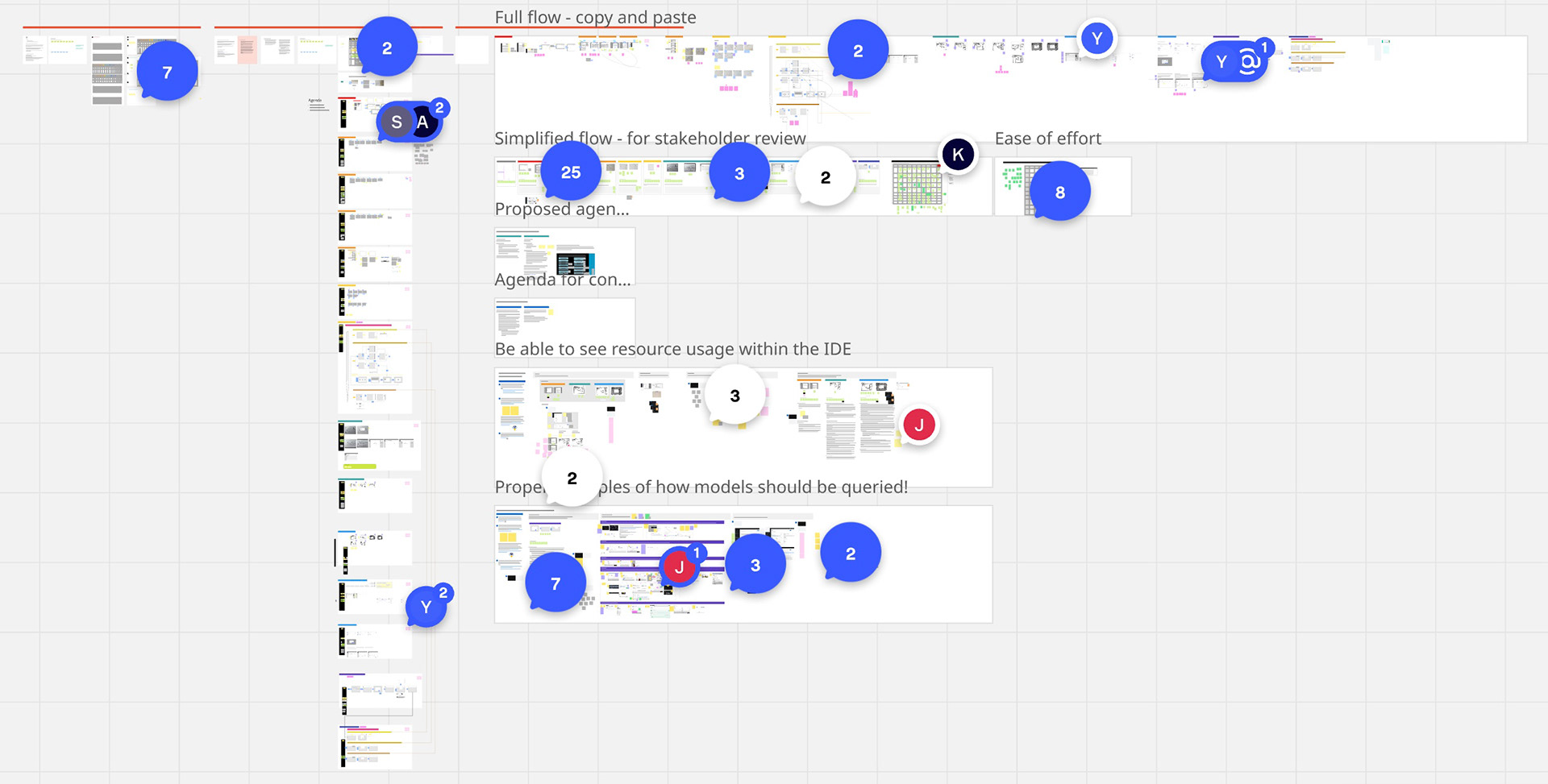
Based on this work, some competitive analysis, feedback from Field Architects, and numerous discussions with engineering and product team stakeholders, we determined the first critical step to improving the users' experience is an updated information architecture (IA). Without this update we will be forced to keep adding additional features into an already disjointed navigation structure that was designed when the product had only four pages.
In order to make sure we design navigation that fits the user's mental model of the product we are currently in the midst of doing rounds of iterative user testing and design work. Once we are confident the new IA fits our users' needs and it has been accepted into the product, we will be able to use the pre-existing work to provide additional experiences that will help elevate the product for our users.